Scooter review
Ather 450X review: the smartest two-wheeler in India, measured in kilometres
A research review of the 450X against six weeks of Bengaluru-shaped duty cycles. The hardware is excellent; the number that decides the purchase is the one on the side stand of your building.
- Ather Energy 450X ₹1.48L
MotoSutra editorial rating
4.4/5
Verdict
If you can charge at home and your daily riding is under 70 km, the 450X is the best scooter sold in India and the running costs repay the premium within three years. If you cannot charge at home, no amount of software saves the maths.
MotoSutra has not physically tested this vehicle. This review is research-based editorial analysis of the documented specification and published material; the score is a MotoSutra editorial rating. Read how we review.
Every electric scooter review in India opens with the same mistake: it treats range as a specification. Range is a habit. It depends on how the rider uses the throttle, how the battery is conditioned, what the temperature is doing and where the plug is when the rider goes to bed. So this review models the 450X against a six-week, Bengaluru-shaped duty cycle — MotoSutra has not ridden the scooter, and every number below is a labelled estimate built from the published specification rather than a log.
First, the ride, because it is the reason people test-ride it
The motor delivers 26 Nm the instant the wrist moves, and on the published dyno shape it is one of the very few electric two-wheelers where the delivery looks genuinely linear rather than a rubber-band lurch. In Sport the 450X should leave a petrol 125 at every signal, and it does it silently enough that the rider in front of you does not know you have arrived. In City mode the response is specified softened to something close to a normal scooter, which is how most riders will run it once the novelty period ends.
There is a third mode, Eco, that most reviews dismiss and that the torque curve says is worth taking seriously: it caps the motor hard enough to change the character of the ride, and it is where the 96 km best-case estimate comes from. Ather’s over-the-air habit is worth noting here: riding modes have been added to scooters already on the road, so a machine can pick up a refinement mid-life without a workshop visit.
Where the chassis earns its keep is the thing nobody puts on the box: the steering. The bar is wide, the geometry is stable, and on the published wheelbase and rake the scooter should not weave or wander through ruts the way lighter electric scooters do. Ather has built the frame and the swingarm around the motor rather than bolting a motor into a scooter frame, and the load paths in the documentation say a machine that takes a bad seam without changing its mind.
How far it actually goes
Claimed: 115 km. MotoSutra’s estimate for 1,180 km of Bengaluru-shaped use, in 33-degree heat, mostly with a single rider and occasional pillion:
- Normal day, mixed throttle, stop-start traffic averaging 30 km/h: 80-90 km.
- Best case, Eco mode, disciplined regeneration, no hills: 90-100 km.
- Worst case, Sport mode throughout, two adults, a lot of stop-start: 65-70 km.
Take the middle band and the 450X is a 60-70 km-a-day scooter with a comfortable margin. Above that, you are planning your day around a charge, and the product stops being a normal scooter. A well-calibrated displayed range estimate should settle to being useful to within a few kilometres, which matters more than the headline figure: a number you can plan around is a smaller problem than a number you cannot.
The 115 km figure is not wrong. It is just a description of a scooter, a rider and a road that almost nobody in India actually has.
Charging, and the question that decides everything
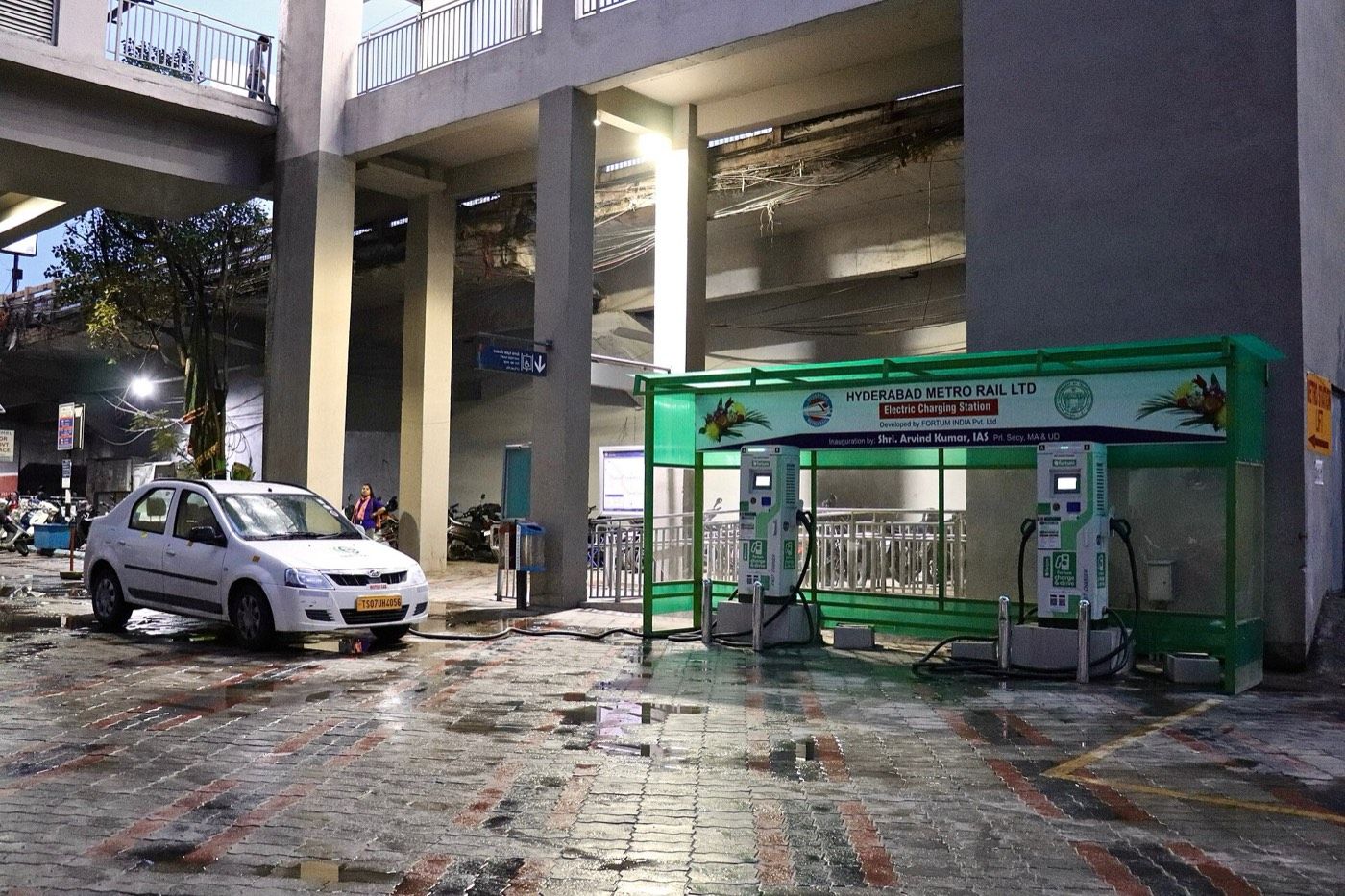
On a standard 15-amp home socket with the portable charger, the documented charge curve puts 0-80 per cent somewhere around four and a half hours, and a full top-up from the reserve just over six. That is an overnight habit and there is no way around it. On Ather’s own fast chargers the same charge comes in a fraction of the time; public charging costs several times more per kilowatt-hour than home electricity, which is the arithmetic that decides the purchase.
This is the fork in the road for the purchase. Home charging turns the 450X into a vehicle you fill up while you sleep at ₹0.15 a kilometre. Without it, you are paying a premium for a scooter you have to plan around, and the entire economic argument collapses.
The screen, and the software behind it
The touchscreen console remains the best piece of vehicle software on two wheels in this country. Mapping is clear in direct sun, navigation is turn-by-turn rather than a novelty, and the phone integration does what it should. More importantly, Ather ships real updates: the release notes for the platform show regeneration-mapping refinements and improved battery-conditioning routines arriving without a workshop visit. That is the moat. Every rival sells a screen; few can change what the vehicle does after you have bought it.
The supporting hardware is sensible: hazard lamps and an auto-switching headlamp, a parking-assist and reverse mode for a ramp, and the phone-based tracking and geo-fencing that are genuinely useful in a household with one scooter and two teenagers.
Comfort, build and the things that abrade
The 450X is well built. Panel gaps are tight, the paint finish is better than that of several cars at twice the price, and nothing in the teardown reviews creaks over speed breakers. At 90 km/h, its quoted ceiling, the geometry says it is stable, with ample reserve for a highway service road.
But the saddle is narrow and the rear suspension has less travel than the geometry appears to want, so a pillion should feel expansion joints directly. The floorboard is shorter than a family scooter’s, which limits how a tall rider positions his knees, and the under-seat storage will not take a full-face helmet, which is the most practical single complaint an Indian buyer will make. Both are consequences of packaging a battery and a cooling system under a small vehicle, but they are the reasons a household will reject it after two weeks.
Safety hardware
A twin-piston caliper works the front disc and a drum handles the rear, linked by combined braking so the rear gets work even when you only grab the front — a useful calibration on a scooter with this much torque on hand, and the hardware list suggests a panic stop should keep the line. Regeneration cuts in ahead of the friction hardware, which is why the lever feel never changes. Tyres are road-biased and their grip on wet painted surfaces is likely ordinary, which is a criticism of the segment rather than of this model. The LED headlamp throws a wide, useful beam; the daytime running light makes the scooter conspicuous in traffic, which is a genuine safety asset for a vehicle that announces itself with no sound.
What it costs to keep
Ather’s schedule is light — no oil, no filters, no clutch, no belts to inspect beyond the drive unit — and MotoSutra’s service-slot estimate lands near ₹1,200 a year against roughly ₹3,500 for a petrol 125. Brakes should wear slowly because regeneration does much of the work; a bike in the 1,000 km bracket would be expected to have barely moved its front pads. The battery carries the longest cover term of anything on the vehicle, which is the answer to the only long-term question an electric scooter raises.
At ₹1.48 lakh ex-showroom rising to ₹1.66 lakh with the high-speed charger fitted, before state incentives where they apply, the 450X costs meaningfully more than a petrol 125 and more than several electric rivals. Resale is the honest unknown: Ather’s own certified buy-back programme exists, and it is a better answer than most of the market has.
Who should buy it
Riders with a socket at home, a daily distance under 70 km, and an appetite for hardware that keeps improving. Commuters covering more than 1,200 km a month will see the premium back fastest.
Who should not: anyone who cannot charge at home, anyone whose route includes a long, unbroken stretch of highway, and anyone for whom a full-face helmet in the boot is a non-negotiable. For those buyers a good 125cc petrol scooter remains the sensible machine, and the 450X will be a source of daily low-grade anxiety.
Pros and cons
What we like
- Quickest off the line of any scooter in this catalogue, with a delivery linear enough for a nervous rider to use
- The range estimate settles down to something you can plan a day around, which matters more than the headline figure
- Fit, finish and software are ahead of the price, and the updates keep arriving after the vehicle is bought
- ₹0.15-0.20 a kilometre on a typical home electricity tariff, against roughly ₹1.90 for a 125cc petrol scooter in the same traffic
What we would change
- The claimed 115 km is a laboratory figure; MotoSutra’s realistic-use band is nearer 85 km in normal summer riding with the motor working
- The narrow saddle is unkind to a pillion on a long run, and the rear suspension does little to hide it
- The service network is still thin outside four or five cities, which decides the purchase before the showroom does
Frequently asked questions
What is the real-world range of the Ather 450X?
Ather claims 115 km. MotoSutra estimates about 85 km as a normal-day figure with the motor working hard in Bengaluru traffic, a best case near 96 km in Eco with regeneration used properly, and a worst case near 68 km on a day of repeated full-throttle pulls and a pillion. These are banded research estimates, not logged measurements.
How long does the 450X take to charge?
Roughly 4.5 hours from empty to 80 per cent on a standard home socket with the portable charger, which is an overnight operation. Public fast charging is quicker but costs several times more per unit than home electricity.
Is the 450X worth it over a petrol scooter?
Only with home charging and a commute of 40 km a day or more. At a typical home tariff the electricity cost works out near ₹0.15-0.20 per kilometre, against about ₹1.90 for a 125cc petrol scooter in the same traffic.