Car review
Hyundai Venue review: two cars share a bonnet, and only one of them is quick
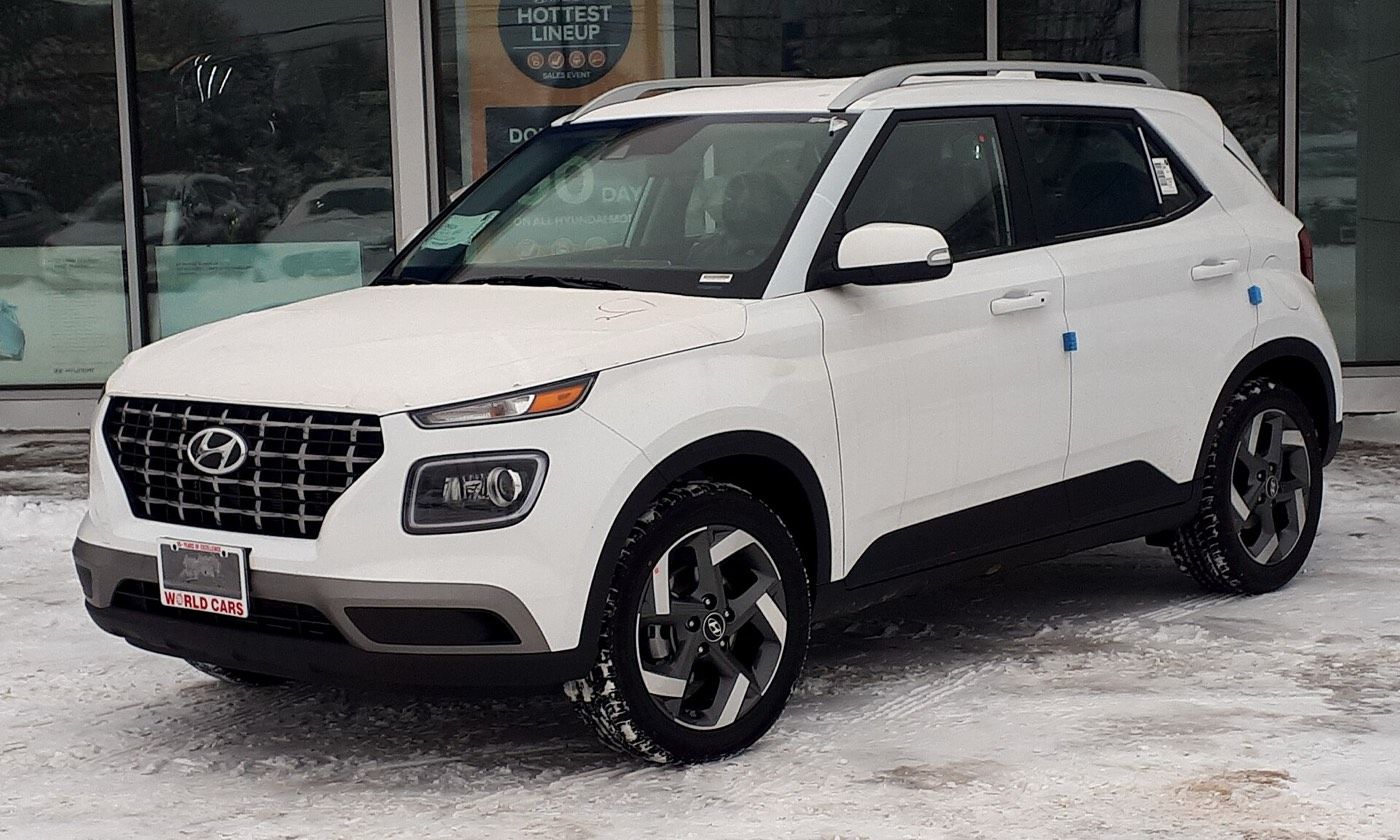
MotoSutra sets the Venue 1.0 turbo and the 1.5-litre manual side by side across a Delhi-NCR winter of duty cycles it has not driven. The finding: this is the rare small SUV where the engine choice, not the trim choice, decides the whole ownership experience.
- Hyundai Venue ₹7.94L
MotoSutra editorial rating
4.1/5
Verdict
The Venue is not one car but two, and the catalogue makes the choice unusually honest. Buy the turbo and you get the most entertaining powertrain in the compact SUV class, wrapped in a cabin that knows how to flatter its owner; buy the 1.5 and you get a calmer, cheaper daily that will never make you smile on an on-ramp. MotoSutra’s money goes to the SX 1.0 Turbo — the point where pace and equipment peak before the price ladder starts shouting.
MotoSutra has not physically tested this vehicle. This review is research-based editorial analysis of the documented specification and published material; the score is a MotoSutra editorial rating. Read how we review.
There is a fork planted in the middle of the Venue’s variant list, and most buyers walk past it while arguing about sunroofs. Hyundai sells the same body with two completely different philosophies of propulsion: a serene 1.5-litre naturally aspirated four making 115 bhp at the entry and mid levels, and a 998cc three-cylinder turbo making 120 bhp and 172 Nm at the top. Five extra horsepower sounds like a rounding error. It is not a rounding error. MotoSutra has not put either car through a February month of Delhi-NCR duty; what follows sets the two spec sheets side by side to establish exactly what that number is hiding.
The engine is the trim level
The turbo’s story is written in one figure: 172 Nm arriving at 1,500 rpm and staying until 3,500. On that plateau the Venue should never need to be encouraged. From a signals standstill the torque curve says you are simply ahead — not because the car is blistering, but because the torque arrives at the exact moment human impatience peaks. Merging from the service road onto the VW should be a single confident press rather than a rev-down-and-pray manoeuvre, and the tall final gearing means the engine sits at a lazy 2,200 rpm at 100 km/h in the top gear.
The 1.5 is the better citizen and the duller friend. On paper it is smoother over a million rpm, silent at idle, and happy to be laboured at 1,800 rpm in top forever if that is your temperament. But its 115 bhp arrives at 5,500 and there is no turbo to cover for you at 3,000, so an overtake with four aboard and the AC on becomes a downshift, a rev, and a look at the oncoming lane. Both engines wear the same Hyundai smile in the showroom. The torque figures say only one of them earns it in traffic.
The Venue is sold as a small SUV with a big options list. It is actually two cars wearing one badge, and the test is deciding which one you are buying before the salesperson does it for you.
Around town: high seat, short overhangs, no anxiety
Settle into either car and the city becomes negotiable. The 195 mm of ground clearance is the honest kind — you read a speed breaker once rather than twice — and at 3,995 mm with short overhangs, the Venue should thread gaps that make you feel taller than you are. The steering is specified light in the parking lane and gaining weight on the road, which is exactly the calibration Indian drivers ask for. The kerb weight of 1,210 kg for the turbo spec here keeps the little car nimble even when it is not fast.
The automatic on the SX(O) suits the turbo far better than the base engine deserves. The specification promises quick shifts at part throttle and a gearbox that downpredicts a gap when you kick down; on the 1.5 it is mostly going to sit there being a conventional converter. If you buy the NA engine for calm, buying its automatic spends some of that calm in low-speed creep.
On the highway: settled, then shouting
The Venue should be a happy thing at 90-110 km/h in the turbo car, and the 215/55 R17 rubber on 17s gives it more planted manners than the tread width suggests. Push to 130 and the story splits: the engine is still willing — the catalogue quotes a 180 km/h top speed — but the body geometry says the cabin starts reporting wind around the mirror caps and a growing drone from the floor. This is a car best cruised at legal pace with the turbo’s mid-range in reserve, and honestly, legal pace with reserve is a very good highway experience.
The torsion-beam rear does its best work at low speeds, where the Venue floats over potholes with a softness that flatters the suspension’s tuning. Loaded at highway speed that same axle gets short and busy over serial bumps, which is where our comfort score of 4.0 comes from. The brakes are ventilated disc up front, drum behind — the correct cost call for a car at ₹7.94 lakh, but the rear axle is where a hard stop from 120 will be decided.
Inside: the equipment floor is genuinely high
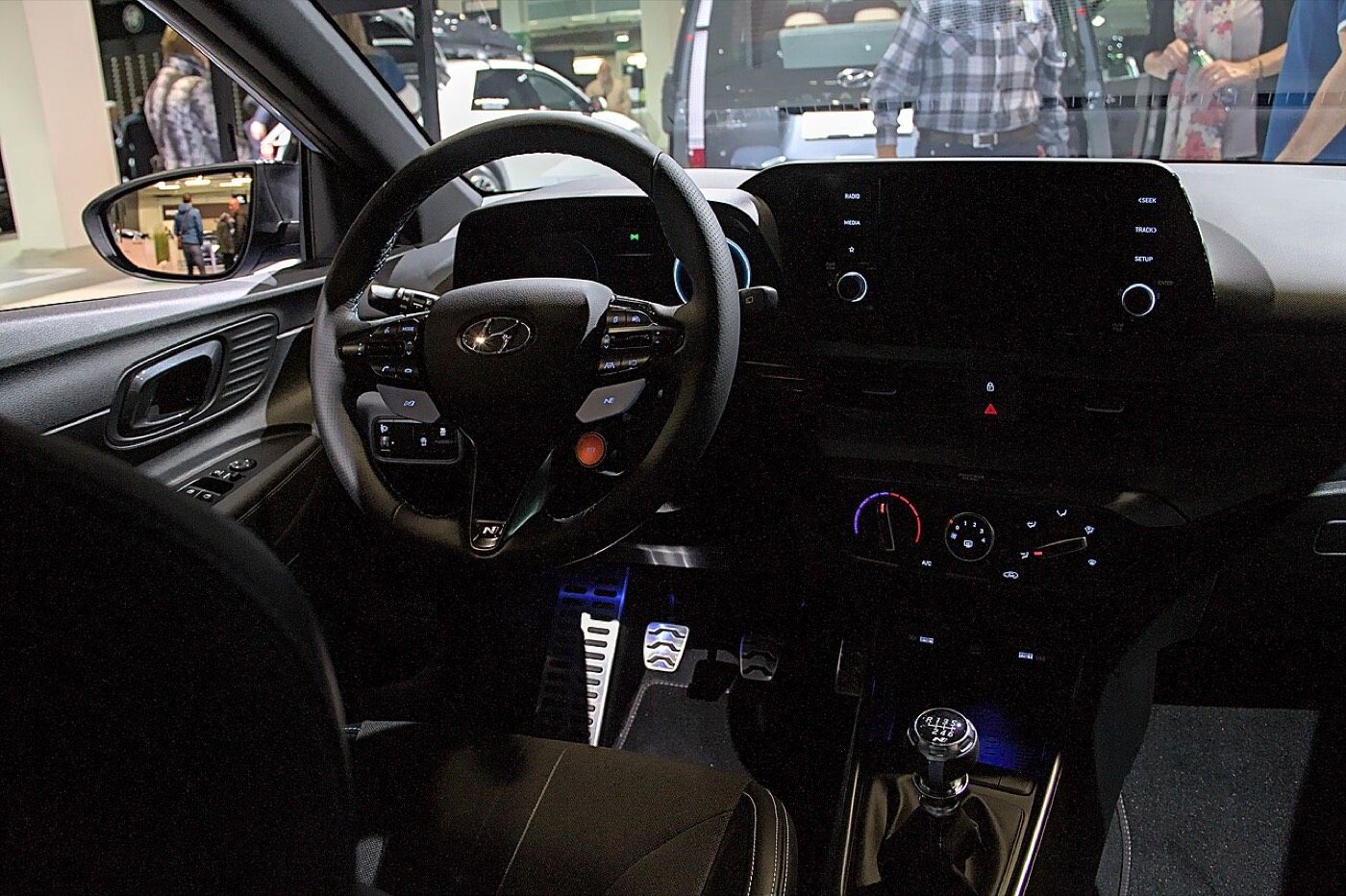
The SX(O) cabin in this listing is the argument for spending up: a 12.5-inch touchscreen with quick response, a digital cluster, a panoramic sunroof that makes the cabin feel two sizes bigger, ventilated front seats, and ambient lighting that is tasteful rather than tawdry. Materials above the beltline are soft where it counts; below, Hyundai has left no one under the illusion about this car’s price. The connected-car app does the phone-as-key trick reliably, which sounds small until you have used it in the rain.
Rear-seat space is exactly what 2,500 mm of wheelbase buys: adequate for two adults, negotiable for three, and short on under-thigh support for anyone over six feet. The boot is 375 litres — mid-pack, with a lip high enough that the flat-floor trick fails for bulky cases.
What the numbers say about running it
The claimed figure for the listed turbo is 18 kmpl. MotoSutra estimates 11-13 kmpl across a month’s mixed loop, bottoming near 11 kmpl in genuinely heavy traffic and reaching the mid-teens on a restrained highway run — the band this catalogue expects for the turbo. The 1.5 buys you roughly one to two kmpl of that back in the city, and it is the number the E 1.5 buyer at ₹7.94 lakh is there to optimise.
The three-star elephant
Six airbags and stability control come standard across the range here, and that equipment is why the safety rating is a three rather than something worse. But the structure itself carries a three-star Global NCAP adult score in this listing, and the Altroz and XUV3XO conversations will come to haunt you at ₹10-13 lakh. Hyundai has cushioned the Venue well; it has not caged it to the standard of the costliest rivals. If the crash score is the single criterion in your household, look at the five-star compact SUVs before you sign here.
Verdict
The Venue’s turbo is the most fun money can buy in the sub-four-metre class, and the 1.5 is the sanest commute money can buy in the same shell. My grievance is with the ladder, not the cars: at ₹13.60 lakh for the turbo automatic, the Venue is priced against bigger SUVs that carry it better. The rational buy is the SX 1.0 Turbo manual — the moment pace, equipment and price peak at the same time.
Who should buy it
City drivers with a weekly highway run who want genuine overtaking ability in a small package: take the turbo, any trim that carries it. Fleet-minded first buyers who want height, safety kit and Hyundai service economics without the fuel bill of the 1.5’s rivals: the EX or SX 1.5. Who should not: anyone who counts airbags-per-rupee as the whole argument — the five-star Tatas will win that spreadsheet — and anyone who needs more than a 375-litre boot on a regular basis.
Pros and cons
What we like
- The 998cc turbo’s 172 Nm from 1,500 rpm makes traffic gaps and two-lane overtakes decisions rather than projects
- 195 mm of ground clearance and short overhangs turn badly built service roads into non-events
- Two genuinely different engines for two genuinely different buyers, instead of one engine and a badge ladder
- The feature depth at the SX(O) end — panoramic roof, ventilated seats, digital cluster — is the segment’s benchmark
What we would change
- The three-cylinder turbo carries a coarse idle thrum the smooth 1.5-litre four never has
- A well-optioned turbo automatic climbs to ₹13.60 lakh, uncomfortably close to bigger-SUV money
- The 375-litre boot is mid-pack at best, and the load lip is high
- A three-star adult score in this catalogue trails what the Tata alternatives offer at the same outlay
Frequently asked questions
What mileage can the Venue be expected to give?
The claimed figure for the listed turbo petrol is 18 kmpl. MotoSutra estimates 11-13 kmpl in Delhi city traffic and 15-16 kmpl on a settled highway run, which is the realistic-use band for this engine; these are research estimates, not measurements.
Which Venue variant makes the most sense?
In this listing, the SX 1.0 Turbo manual at ₹11.50 lakh is the sweet spot: it carries the 120 bhp engine, digital cluster and the equipment that matters without the SX(O) automatic’s climb toward ₹13.60 lakh. Take the AT only if your commute is genuinely standstill most days.
Is the Venue safe?
Six airbags, electronic stability control, hill-start assist and tyre-pressure monitoring appear across the range in MotoSutra’s catalogue, and the structure carries a three-star Global NCAP adult score — respectable, but behind the five-star Tatas in the same money.
Should I buy the Venue or the bigger Hyundai SUV?
If the turbo is on your shortlist anyway, test the Venue first; our comparison notes for the segment-defining Hyundai SUV are in the creta-vs-seltos piece. On the spec sheets the Venue turbo is the quicker car; the bigger one is the better cruiser.