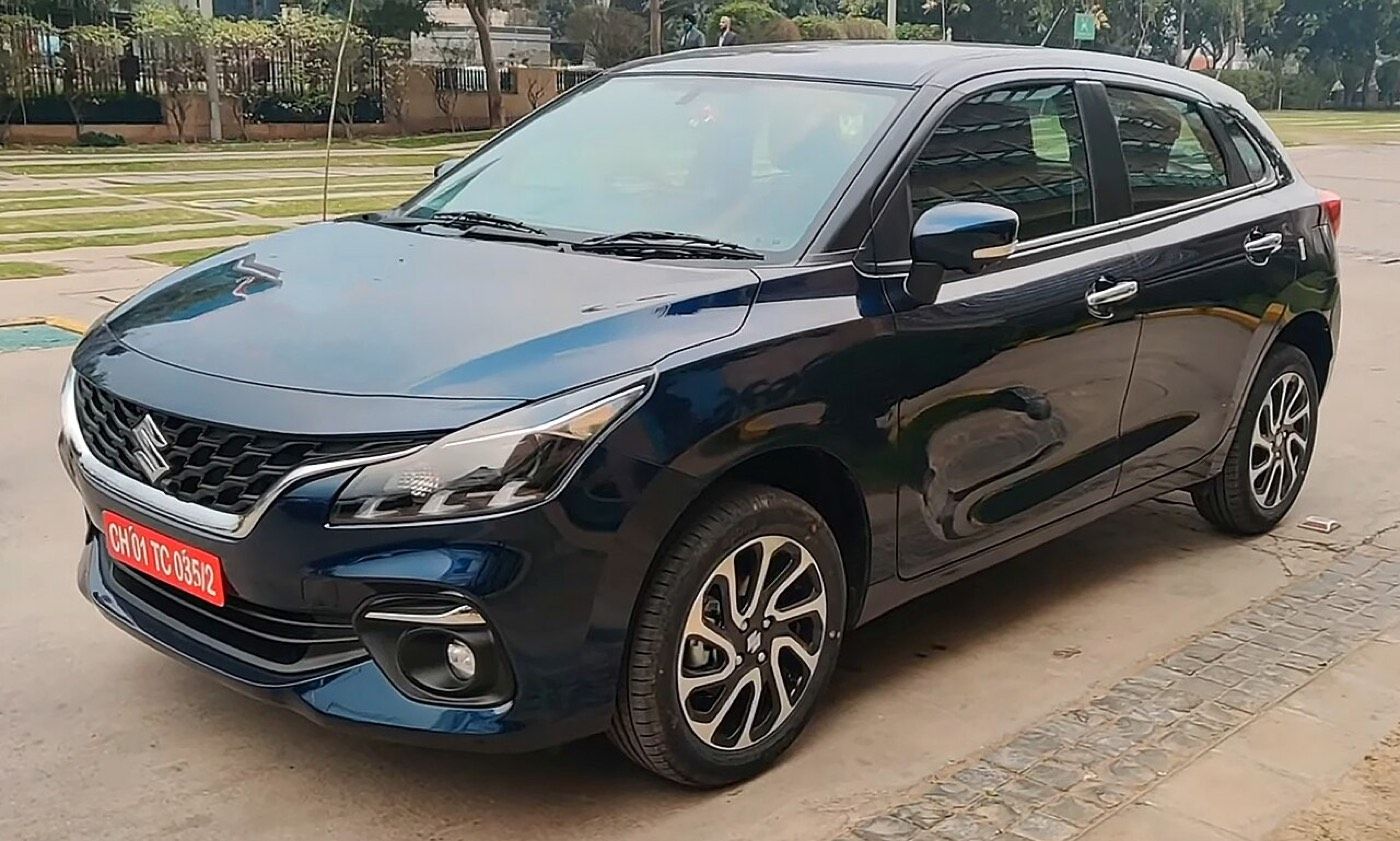
Car review
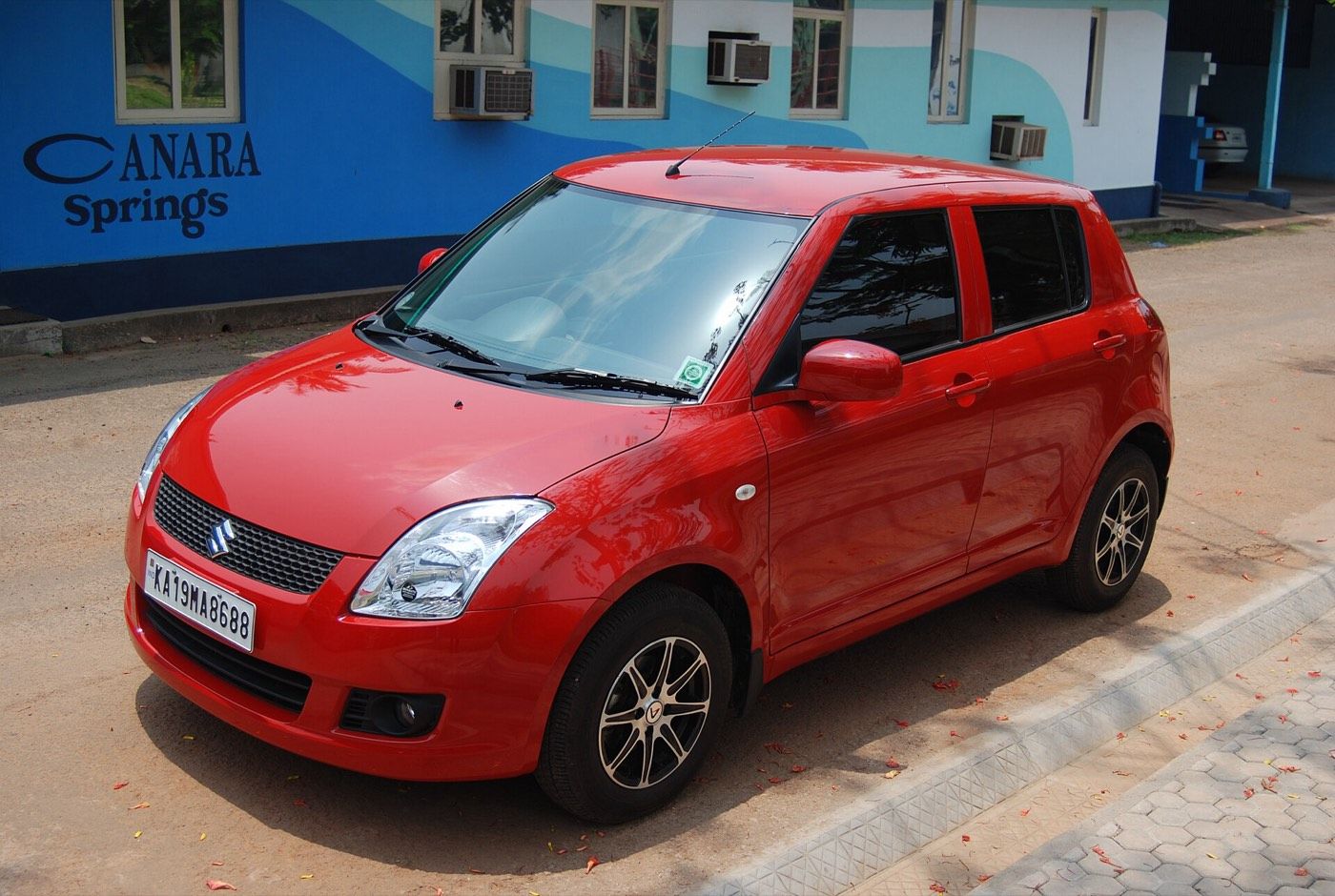
Maruti Suzuki Swift review: the default answer, still
A research review of the 1.2-litre hatchback against Delhi traffic realities. The mileage case is real, the cabin is honest about itself, and the argument for buying one is mostly arithmetic.
- Maruti Suzuki Swift ₹5.84L
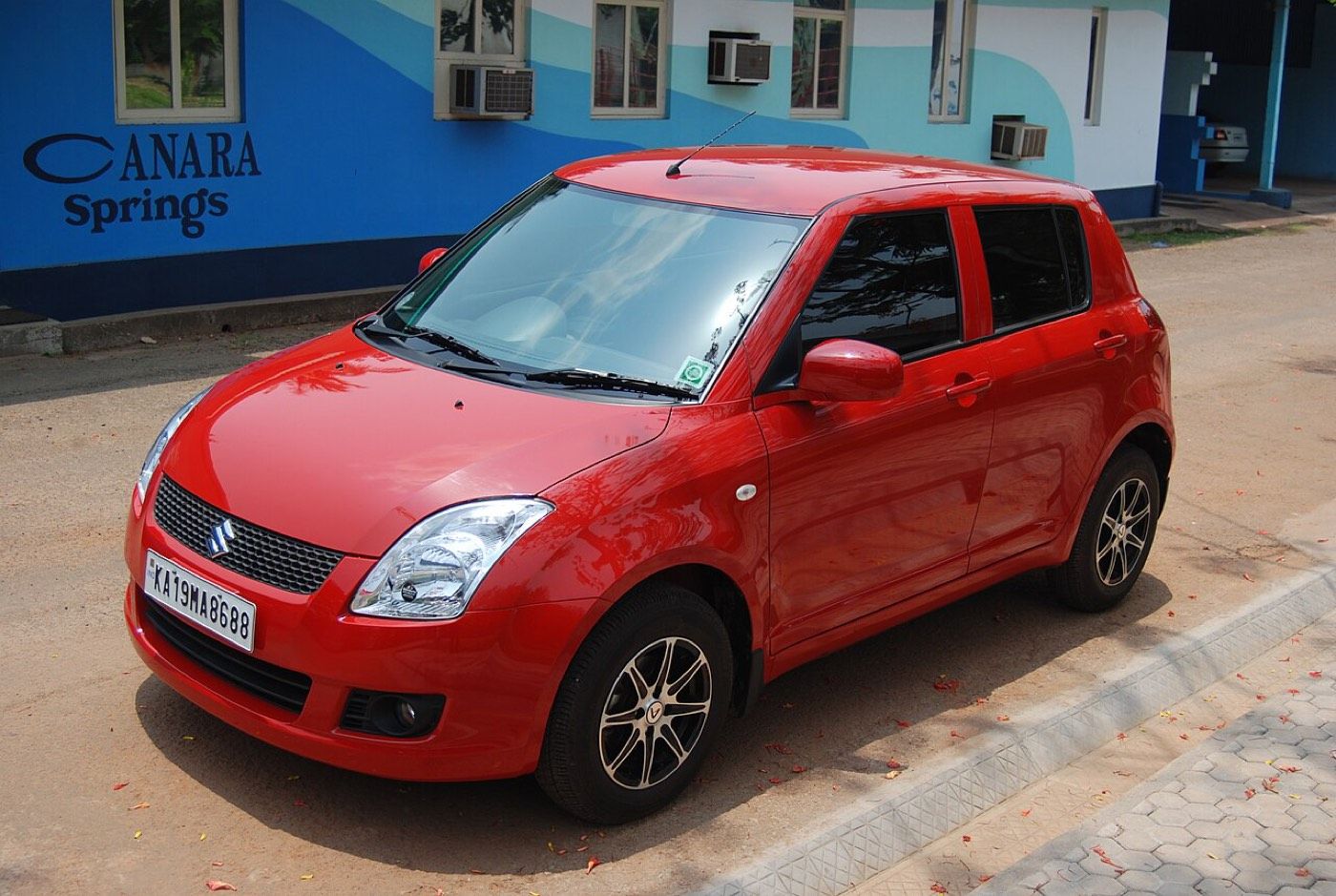
MotoSutra editorial rating
4.1/5
Verdict
The Swift remains the correct purchase for anyone who reads the service price list before the feature list. Buy the ZXi manual and you get the safety hardware and the equipment that matter; buy anything else and you are paying for a badge that does very little work for you.
MotoSutra has not physically tested this vehicle. This review is research-based editorial analysis of the documented specification and published material; the score is a MotoSutra editorial rating. Read how we review.
Nobody falls in love with a Swift. That is not a criticism so much as the entire business plan. Maruti has built a hatchback that wins on arithmetic, and arithmetic is best checked against your own route book rather than a launch venue’s brochure. MotoSutra has not driven this car; what follows is a research-based reading of the documented specification, and this is what the ZXi-plus-Sport specification looks like once you stop being new to it.
In traffic, where the car earns its money
The 1,197cc four makes 79 bhp at 5,500 rpm and 108 Nm at 4,200 rpm, and both peaks are placed exactly where Indian traffic lives. From a standstill the Swift should be quicker off the line than its numbers suggest, because it only has to move 966 kg. On paper the clutch looks light enough that a 90-minute crawl to Noida should leave your left shoulder unbothered, and the gate in the five-speed box is specified short, with just enough definition to tell you where you are without punishing you for guessing.
On the documented ratio list the engine looks happiest between 2,000 and 4,000 rpm, and it should not need to be worked. Tip it past 4,500 and the specification implies a small, hard note from the bulkhead, and there is no reason to expect the speed to follow the noise in any meaningful way. In traffic this means the Swift should filter through gaps without drama, and without making you feel like you are holding up the bus behind you, which in Delhi is a safety feature in itself.
On the highway: composed to 100, interested beyond that
The gear ratios put the engine around 2,800 rpm at 100 km/h in fifth, and the documented cabin suggests a reasonable place to be at that speed; on the specification, wind noise should be more evident than engine noise, and owners of the platform report the A-pillars streaming badly in rain — though MotoSutra holds no owner data of its own. The speedometer will climb to 140 km/h and the power figure says the car starts to feel like it is arguing with itself there, particularly in crosswinds off the back of a truck. Overtaking on a two-lane road means a downshift, not a kick-down; the AMT, in its defence, is specified to execute that downshift more decisively than most human drivers do.
Directional stability should be good for the class, thanks in part to the 185/65 R15 tyres on 15-inch wheels. On paper the thing most likely to let the car down is mid-corner adjustment: the geometry implies the tail lightens on a lift-off over a broken stretch, and how sharply it does so is a question only a test drive can answer. That unresolved question is the reason our comfort score sits at 4 rather than something more generous.
The Swift is the only car in India whose buyers read the service price list before the feature list, and the car has been engineered around that fact.
Refinement and NVH
New cars are usually quieter than three-year-old ones, so it is worth being precise about what a specification can and cannot tell you. On smooth tarmac the Swift looks like a hushed small car at legal speeds on its weight and its equipment list. On broken tarmac the risk is structural: door skins, the tailgate trim and the plastic at the base of the A-pillar are the panels that make noise on a light, cheap-to-build cabin, and the noise grows as the suspension works hard. How much of that a given car accumulates by 6,000 km is exactly the kind of question MotoSutra cannot answer without driving one; this review has not, and the rattle behaviour is a known trait of the segment rather than a measured finding here.
What 25 kmpl actually costs you
The claimed figure is 25 kmpl. MotoSutra estimates 15-17 kmpl in genuinely heavy city traffic and 20-23 kmpl on highway runs at 90-100 km/h with the air conditioning going, with a mixed-use band of 16-19 kmpl — real-world readings of the kind we cannot collect ourselves, banded rather than measured. Put differently: at these numbers, and at ₹95 a litre for petrol, this car costs around ₹5.50-6.50 a kilometre to run in the city, against roughly ₹6.40 for a mid-size SUV in the same traffic. That gap is the whole reason this review exists. Maruti’s own marketingsuggest a mixed-use figure well above our band, and the discrepancy is the honest part of the story.
Inside: equipment has caught up, materials have not
The 7-inch SmartPlay Pro+ touchscreen is specified as quick, and the reversing camera has decent dynamic guidelines. The digital cluster is legible in sunlight. Cruise control on the ZXi is a single-stalk affair and should work well enough on expressways. But everything the teardown reports you touch is hard. The steering rim is plastic, not leather. The seat fabric is thin. The boot is 265 litres, which should swallow two cabin bags and a fortnight of shopping, and the load lip sits high enough that a dog crate is a poor fit.
The rear bench is where the trade-offs concentrate. Shoulder room is genuinely good for the money, and the 185 mm of ground clearance means you are not folded into the seat the way some rivals fold you. Under-thigh support is minimal, and a sixth-foot adult behind his own seat has to splay his knees.
Safety hardware and what it does not fix
Six airbags, ABS with EBD, electronic stability control and hill hold are fitted from the ZXi trim upward. That is the correct decision by Maruti, and the fact that you can buy it at ₹7.41 lakh is the argument for the mid-spec car. What those airbags do not change is the structure underneath: the catalogue carries a two-star adult rating, and no amount of cushioning compensates for a cage that deforms earlier than a five-star one. If safety is the single criterion in your household, the Swift is not the answer at any price in this band.
Running it: service, parts, resale
The schedule asks for oil and inspection every 10,000 km or one year, and typical outlet quotations for a normal service on this engine run in the low thousands of rupees. Tyres, filters and wipers are on the shelf everywhere in the country, which is what “cheap to own” actually means in practice rather than in a brochure. Resale is the segment benchmark; three-year-old Swifts have long traded at a premium to every rival here.
Who should buy it
First-time buyers, city commuters covering under 1,500 km a month, and families who need one car that will not surprise them at a service station. Buy the ZXi manual, or the ZXi AMT if the commute is genuinely stop-start.
Who should not: anyone who carries four adults weekly, anyone who tows or tours at 120 km/h, and anyone for whom the crash rating is a deal-breaker. For those buyers the answer is a five-star compact SUV, not a quicker hatchback.
Pros and cons
What we like
- The 1.2-litre petrol is smooth and willing in the traffic band, with a gearbox that asks nothing of your left arm
- MotoSutra estimates 16-19 kmpl in mixed use against the claimed 25 kmpl, a real-world gap most rivals cannot match either
- Six airbags, ABS with EBD and stability control arrive at the ₹7.41 lakh ZXi, not at the top of the range
- Service pricing and parts availability remain the benchmark a first-time buyer can actually plan around
What we would change
- The ride goes from composed to fidgety once four adults and a fortnight of groceries are on board
- Hard-wearing plastics everywhere; the cabin asks you to appreciate economics rather than craftsmanship
- The two-star adult rating in the catalogue still trails what the ₹9 lakh badge should carry
Frequently asked questions
What mileage can the Swift be expected to give?
MotoSutra estimates 15-17 kmpl in heavy city traffic and 20-23 kmpl on a 90-100 km/h highway run, against the claimed 25 kmpl. The mixed-use estimate band is 16-19 kmpl, and anything a dealer quotes above that is describing the laboratory, not your commute.
Which Swift variant should I buy?
The ZXi at ₹7.41 lakh adds six airbags, stability control and cruise control over the Delta. The ZXi AMT costs ₹95,000 more and is worth it only if you sit in traffic for more than an hour a day.
Is the Swift good for long highway trips?
For occasional 300 km runs, the specification says yes. It should cruise quietly to about 100 km/h, but the sixth-gear leverage thins out on long climbs and the ride is likely to firm up over broken tarmac with a full load — how much is a question for a test drive, not a spec sheet.