Bike review
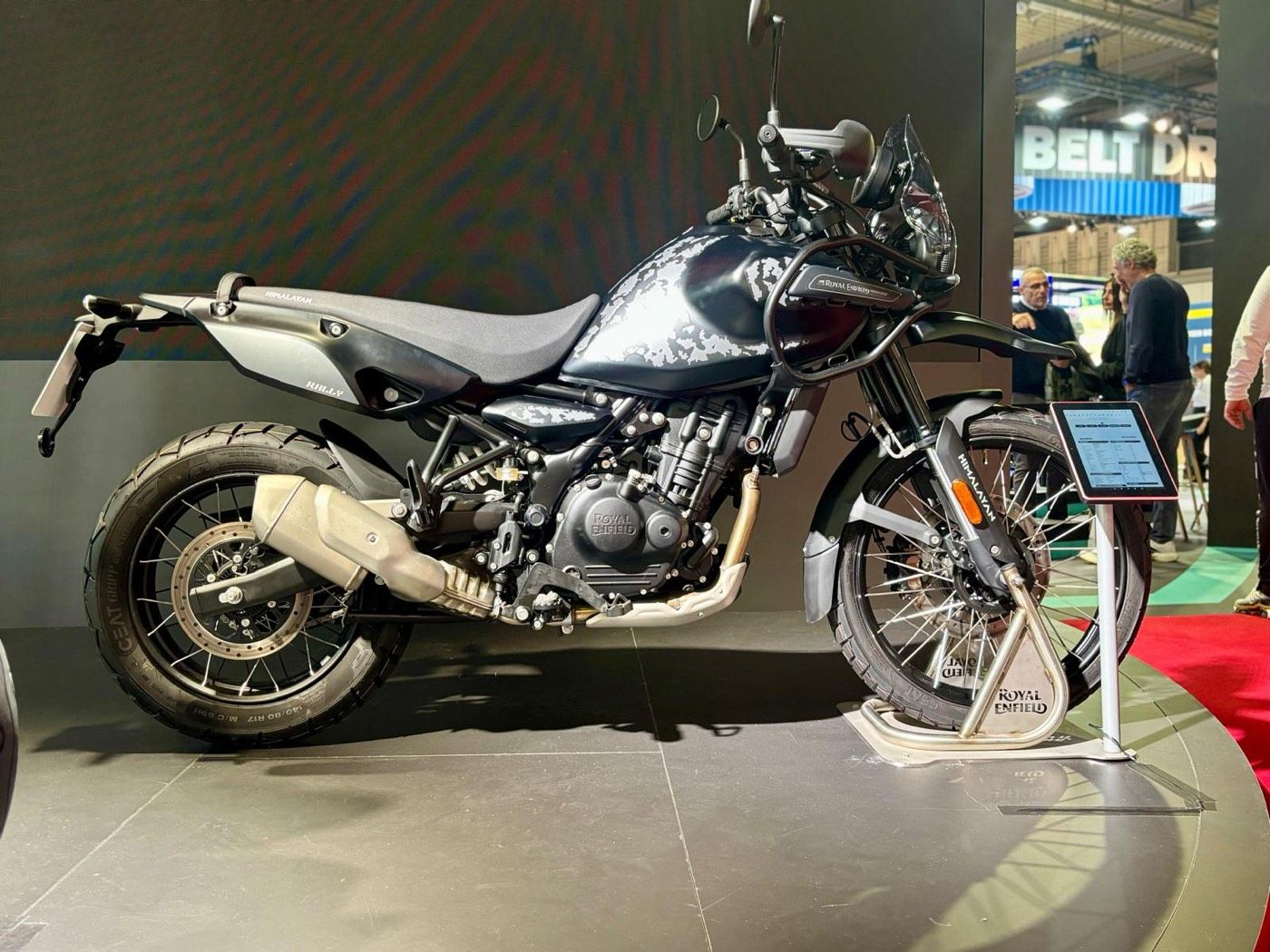
Royal Enfield Himalayan 450 review: the platform that changes the argument
On a long-ride spec sheet — 1,400 km of mixed Indian use as the reference case, one unsealed pass included — the Sherpa-platform Himalayan reads as the most complete motorcycle Royal Enfield has ever built, and the first one that asks to be ridden rather than admired.
- Royal Enfield Himalayan 450 ₹2.85L
MotoSutra editorial rating
4.6/5
Verdict
This is the motorcycle that ends the argument about whether Royal Enfield can build something for people who actually ride. Buy it as a base Himalayan at ₹2.85 lakh and spend the difference on riding gear; the Trek and Tour packs are for owners who already know what they want bolted on.
MotoSutra has not physically tested this vehicle. This review is research-based editorial analysis of the documented specification and published material; the score is a MotoSutra editorial rating. Read how we review.
The first thing worth saying about the Himalayan 450 is that it is not a better old Himalayan. The 452cc liquid-cooled single, the new perimeter frame and the suspension travel figures belong to a different category of machine, and Royal Enfield has finally built one that a competent rider can use at pace on tarmac and confidence on gravel. The obvious reference case is a 1,400 km fortnight — some 600 of it on expressway, 500 on ghat roads and state highways, 300 on surfaces that were not properly roads at all — to see how much of that claim survives contact with India. MotoSutra has not ridden the 450; what follows is a research-based reading of the documented specification against exactly that kind of programme, with the road-test questions flagged where they arise.
On paper, most of it survives. That is the notable part.
The engine, which is the reason to buy the bike
The Sherpa motor makes 40 bhp at 8,000 rpm and 40 Nm at 5,500, and unlike the old 411 both figures mean something on the road. There is a low, forgiving plateau from about 2,500 rpm where the bike will pull in sixth from 50 km/h without protest, which is how you cover distance on a highway with a load on. Then, unusually for a Royal Enfield single, there is a second hit: from 5,500 the engine actually revves, cleanly and with a hard-edged induction note, all the way to a limiter that arrives a little above 9,000.
That top end is the difference, on paper, between enduring a ghat road and enjoying one. The 21 hairpins above Manali are the case the ratio list makes — third and fourth held near 7,000 rpm, a use the old bike never invited. On the highway the speedo climbs toward its indicated ceiling with the engine still not shouting, and MotoSutra’s read of the 40 bhp and six-speed spread is that overtaking a loaded truck at 90 km/h needs a tip of the wrist rather than a decision made three vehicles in advance.
The six-speed box is a genuine improvement: the gate is precise, the neutral find at a signal is reliable, and the clutch is light enough that 200 km of traffic does not punish the left hand. There is no quickshifter, and on a bike you mostly ride in the mid range, its absence is a preference rather than a grievance.
Off tarmac, where it stops being a comparison
The chassis is the story. A 43 mm upside-down fork and a rear monoshock with 240 mm of travel at each end, 230 mm of ground clearance, a 21-inch front wheel shod in a 90-section tubeless spoked tyre, and an ABS mode that switches the rear channel off so the back wheel can be slid on gravel. This is adventure geometry, honestly executed, and it is the first Royal Enfield that can be ridden standing up on broken ground without the machine negotiating with the rider.
On the 300 km of unsealed and semi-sealed track the specification is built for, 240 mm of travel should soak up ruts that upset motorcycles costing more. The fork is soft at the start of its travel and firms progressively on paper, so a harsh mid-corner braking bump should not wash the front. The rear monoshock is adjustable for preload and, Royal Enfield implies, damped for a loaded bike, which means solo riders may find the back end busy over washboard — one click softer is the documented answer for two-up work, and how obvious the difference feels on a real washboard is a test-ride question.
At 196 kg kerb, it is light enough to pick up out of the dirt with the bike in second and both feet working. Heavier adventure bikes feel like an apology on the same ground.
For the first time, the right way to ride a Royal Enfield up a mountain is to ride it fast enough to use the gears.
On the highway, and the question of heat
Two-up at 110 km/h the geometry reads as stable, quiet for its type and comfortable in a way the seat height initially hides. The 825 mm saddle is the specification’s single biggest liability: every rider under average height will be on tiptoe at a standstill with luggage on, and the optional lower seat costs only a little and should be the default for anyone who plans to ride alone in traffic. Royal Enfield’s answer — that this is an adventure bike and legs are a suspension component — is true and unhelpful.
The other limitation is thermal. In slow technical sections and long queues the exhaust shield routes heat onto the right shin, and on a day of stop-start hill climbing this becomes the thing you notice most about the bike. At speed the airflow solves it. At 15 km/h on a switchback it does not.
Wind protection looks adequate behind the standard screen and better on the Tour variant’s taller item. The Tour pack at ₹3.25 lakh adds panniers, top box and heated grips; loaded to the eyebrows with 40 kg of luggage the steering should gain weight without going vague, and the hill-hold assistant exists to stop exactly the gradient-start roll that worries loaded adventure riders. Whether the loaded bike holds those promises is a road-test question MotoSutra has not settled.
Refinement: what 1,400 km of abuse did not do
Refinement is where a motorcycle like this either holds together or does not, and the documented build points the right way. The handlebar mounts, the beak, the pannier stays and the tail section are the parts that have rattled on other adventure bikes, and here they are bolted to a new perimeter frame rather than the old architecture. Royal Enfield says build quality has moved up a level, and the liquid-cooled single is a balancer-shaft engine whose listed vibration is narrow rather than broad. How silent those panels actually stay over a broken 1,400 km is a road-test question; the hardware is at least arranged to answer it well.
Range and efficiency, which are the real adventure features
The claim is 30 kmpl. MotoSutra estimates a loaded, pillion-heavy, throttle-used 1,400 km mix lands around 26-29 kmpl — a good result against the claim — with solo open-road riding nearer the low 30s and a loaded triple-digit highway day dropping toward the mid-20s. On that band the 17-litre tank means a real-world working range of roughly 430-510 km, and on a pass crossing where the next pump is uncertain, that number is more useful than any power figure in the specification sheet.
Cockpit, equipment and the practical details
The five-inch TFT is the best display Royal Enfield has fitted, and the turn-by-turn navigation is not a novelty — it is the feature that lets a rider take an unfamiliar route with the map on the bar and phone audio in the helmet. Ride metrics log the sort of data that makes a rider improve. Heated grips, a 12 V socket and a USB point at the bar are all present on the Tour pack, and the switchgear has been simplified so that gloves do not fight the buttons.
Two gripes. The 130-section rear tyre is a documented compromise between off-road shape and road grip, and on damp tarmac at a leaned-over corner exit it is where the package’s confidence is likeliest to be questioned — a test-ride detail, not a spec-sheet one. And the service schedule asks for more money than any other Enfield here — a liquid-cooled engine, an IMU and a valve train that gets used. Budget for it before you buy the accessories.
Who should buy it, and who should look elsewhere
Anyone who wants one motorcycle for a Monday commute, a weekend hill trip and the occasional genuinely bad road. The base bike at ₹2.85 lakh is the value pick; the Trek and Tour packs add protection and luggage rather than capability.
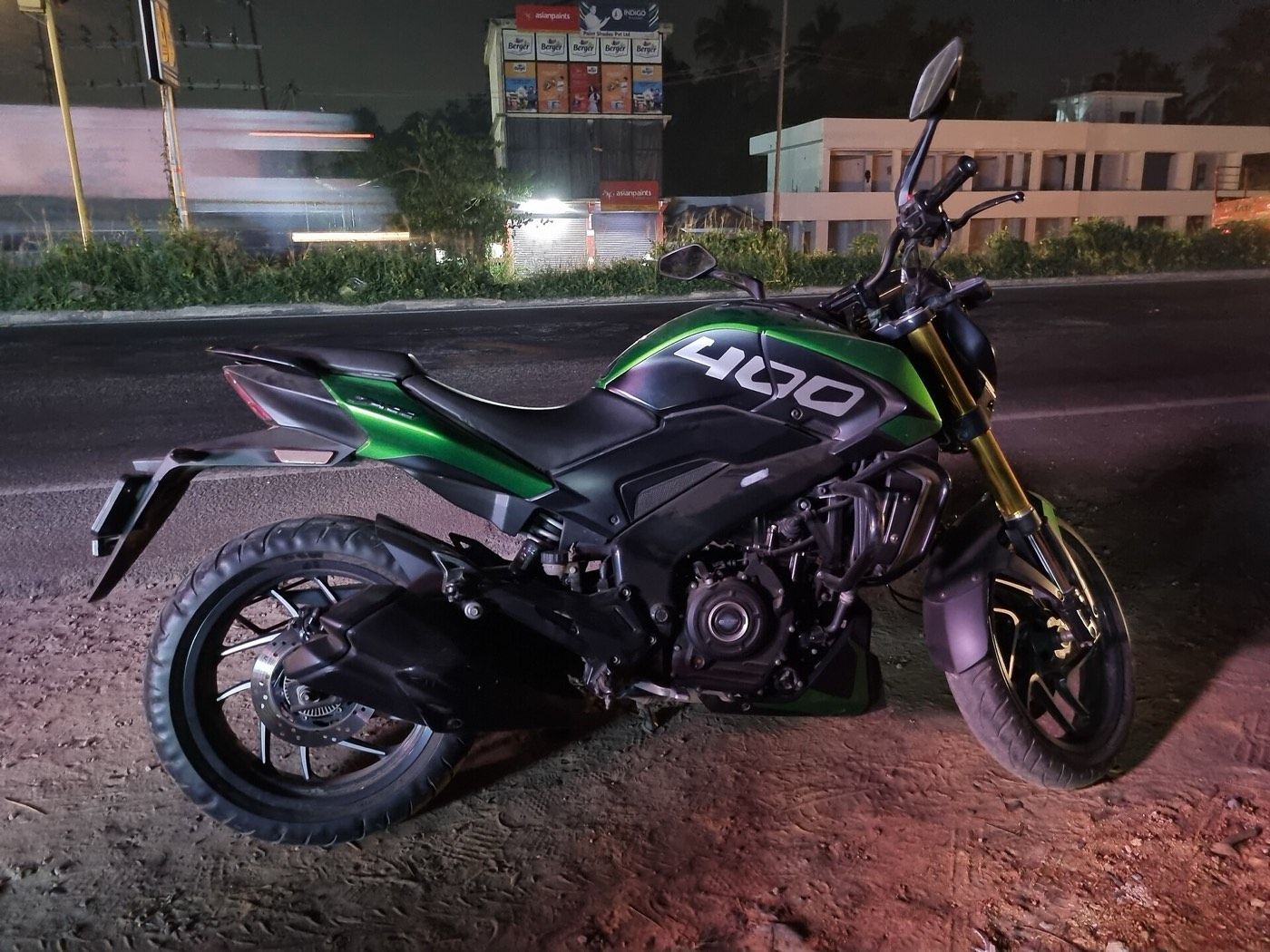
Who should look elsewhere: shorter riders who will spend more time balancing at signals than riding, and anyone whose touring is entirely sealed-road. For them a Bajaj Dominar 400 at ₹2.18 lakh gives more highway comfort and more pace for less money, and never asks them to stand up on the pegs.
Pros and cons
What we like
- 40 Nm from 5,500 rpm plus a revving top end removes the overtaking anxiety that defined the old 411
- 240 mm of travel at both ends and a 21-inch front wheel make it a genuine off-road motorcycle, not a styled one
- Switchable ABS with an off-road mode and IMU-based cornering ABS on the higher variant are class-correct rather than token
- At 196 kg, with the weight low and central, it is manageable when the road surface stops being a suggestion
What we would change
- The 825 mm saddle is a real handful below average rider height, even on the lower seat option
- Exhaust heat finds the right shin in slow technical sections and there is no shield clever enough to hide it
- A liquid-cooled engine with a six-axis IMU carries the highest scheduled maintenance cost of any Enfield here