
Honda Car
WR-V
The Honda WR-V as Honda Cars India specified it for India: launched 16 March 2017, a 1,199 cc i-VTEC petrol or 1,498 cc i-DTEC diesel, manual only, in S, V and VX trims, and no longer in Honda’s India line-up.
- Price
- ₹8.5L – ₹11L
- Delhi ex-showroom
- Mileage
- 16.5 kmpl
- Engine
- 1199 cc
- Power
- 90 PS
- Torque
- 110 Nm
- Seats
- 5
- Boot space
- 363 L
- Fuel
- petrol / diesel
- Gearbox
- manual
Available colours
- Premium Amber Metallic
- Lunar Silver Metallic
- Modern Steel Metallic
- Golden Brown Metallic
- Radiant Red Metallic
- Platinum White Pearl
The colour names are those in Honda Cars India’s release of 2 July 2020. Honda published no paint codes with them, so no swatch colour is shown. The 2017 launch palette was a different six, named in the text.
Overview
This page is the first-generation Honda WR-V as Honda Cars India itself documented it. Honda launched the car on 16 March 2017 and called it a “sporty lifestyle vehicle” in the release that day; the same press office had set that date two weeks earlier, on 2 March 2017, when it announced pre-bookings at ₹21,000. Two engines and two trim levels — S and VX — were on the order sheet from the start. The specification table below comes from Honda’s own WR-V features and specifications page, read from Internet Archive captures of 7 December 2019 and 9 August 2022, and the prices come from Honda press releases that carry their own dates.
The dimensions are the same across that whole span, and Honda’s page states them plainly: 3,999 mm long, 1,734 mm wide and 1,601 mm tall on a 2,555 mm wheelbase, with a minimum ground clearance of 188 mm in the unloaded condition Honda footnotes, a 363-litre boot, a 40-litre tank, five seats and a 5.3 m turning radius. One number is disputed outside Honda: a reference work lists the wheelbase at 2,550 mm. This table prints the 2,555 mm Honda publishes.
The 1,199 cc four-cylinder i-VTEC petrol with sixteen valves is rated 90 PS (66 kW) at 6,000 rpm and 110 Nm at 4,800 rpm, and the 1,498 cc four-cylinder i-DTEC turbo-diesel 100 PS (73 kW) at 3,600 rpm and 200 Nm at 1,750 rpm. Honda fitted a five-speed manual to the petrol and a six-speed manual to the diesel; no automatic or CVT was offered for the India car on the pages read here, and cruise control is listed for the diesel only. Economy is where the car changed most over its life, so the basis is stated rather than blended: the pre-BS-VI WR-V was certified at 17.5 km/l petrol and 25.5 km/l diesel, and the BS-VI version Honda launched on 2 July 2020 at 16.5 km/l and 23.7 km/l. Every one of those four figures carries Honda’s own footnote that it is certified by ICAT under Rule 115 of the CMVR 1989 — a laboratory certification, not a road measurement. The mileage row above prints the BS-VI petrol number, which is the one that applied to the cars Honda sold last.
Pricing moved four times, and each step is dated on a Honda document. The 11 July 2019 release that introduced an “enriched version” — a new Diesel V grade — priced the Petrol S MT at ₹8,15,000 and the Diesel V MT at ₹9,95,000 ex-showroom Delhi. The BS-VI launch release of 2 July 2020 set the four-variant line this catalogue carries: SV MT ₹8,49,900 and VX MT ₹9,69,900 on petrol, SV MT ₹9,79,900 and VX MT ₹10,99,900 on diesel. Honda’s own WR-V price page as archived on 11 August 2022 listed the petrol SV at ₹9,10,900 and the petrol VX at ₹9,89,107. Period reporting put the 2017 launch range at ₹7.75–9.99 lakh and the August 2022 diesel figures near ₹11.27–12.31 lakh; MotoSutra has not read a Honda document carrying either, so neither is printed as a catalogue value. Honda also sold a styled variant it called the WR-V Exclusive Edition, whose own page was live on its site in December 2019; no pricing for it was found on an official page.
Honda’s specification page gives mass per variant rather than one number — 1,084 kg for the 2019 petrol S and 1,103 kg for the petrol VX against 1,168, 1,190 and 1,198 kg for the three 2019 diesel trims, and 1,087 kg and 1,106 kg for the 2022 petrol SV and VX against 1,205 kg and 1,234 kg for the diesels — so this record leaves the kerb-weight row out instead of picking one variant and presenting it as the car. No top speed appears, because no Honda document read here states one. Nor does a crash-test star rating: Honda’s releases list two front airbags and ABS with EBD as standard equipment, Global NCAP’s India results and Bharat NCAP’s roster both carry no WR-V entry, and the three WR-V crash results that do exist belong to other cars in other markets — Latin NCAP awarded a two-airbag Brazil-specimen WR-V one star in September 2022 with 41.03 percent adult and 40.66 percent child protection, ASEAN NCAP awarded an Indonesian WR-V RS equipped with Honda SENSING five stars in 2023, and Japan’s JNCAP awarded the India-built Elevate, sold in Japan as the WR-V, five stars in April 2025 according to Indian motoring press. None of those is a rating for the India WR-V, so none is published as one.
The end of the car is documented by absence rather than by announcement. Honda’s July 2020 release is the last WR-V price list the company published that MotoSutra has read; the WR-V is gone from the line-up on Honda Cars India’s current home page, which now carries the City, Amaze, Amaze 2nd Gen, ZR-V and Elevate, and the old WR-V address on that site hands back the home page rather than a WR-V page. Indian trade reporting in 2022 said the model was to be axed in favour of a new compact SUV, and in April 2023 that it had been removed from Honda’s website, but Honda issued no discontinuation release, so “discontinued” here records the state of Honda’s line-up and the MotoSutra catalogue, not a manufacturer statement. The second-generation WR-V shown in November 2022 was never launched in India; it sells in South-East Asia, and in Japan as the Elevate built here. That means there is no later India spec sheet to compare this one against.
The palette is official and it changed with the facelift. Honda’s 2 July 2020 release names Premium Amber Metallic, Lunar Silver Metallic, Modern Steel Metallic, Golden Brown Metallic, Radiant Red Metallic and Platinum White Pearl, and the price page read alongside it lists an extra premium starting at ₹4,000 for Platinum White Pearl. The 2017 launch release listed a different six: Premium Amber Metallic, Modern Steel Metallic, White Orchid Pearl, Carnelian Red Pearl, Alabaster Silver Metallic and Golden Brown Metallic. The swatches below use the 2020 names. Honda published no paint codes with either list, so MotoSutra shows names without claiming a matched colour value.
MotoSutra drove this car, and the proof survives online. “Honda WRV 2020 Review - First Drive” ran on www.motosutra.in from 28 August 2020, was updated on 10 November 2020, and is readable in an Internet Archive capture made on 26 November 2020; a rewritten version titled “Honda WRV Review 2022 - First Drive”, dated 9 May 2022 and also bylined Rahul Singh, survives in captures of the same article at a /blog/ path from 14 October 2024 and 18 January 2025. The 2020 address itself was still serving the article in a capture of 30 May 2024 and had become a 404 by 4 June 2024. That test is the only measured material on this page, and it is quoted as what it is: a dated first drive of the BS-VI car at its launch, not a current verdict and not a second-hand specification.
Two figures came out of that drive. The BS-VI petrol car reached 100 km/h in 15.1 seconds, which the test noted was almost a whole second slower than the BS4 car had managed, with the petrol engine running to a limiter at 6,500 rpm; the BS-VI diesel managed 13.03 seconds, 0.38 seconds behind the BS4 diesel, and the test attributed the losses to the emission hardware rather than to any change in state of tune — Honda’s lean-NOx-trap route to BS-VI needs periodic rich mixtures to regenerate, which is the mechanism the article describes. The same test says openly that the full MotoSutra fuel-efficiency run had not been carried out on the car, so no measured economy number survived from it, and the 16.5 km/l and 23.7 km/l on this page remain Honda’s ICAT-certified laboratory figures rather than road results. The archived price table in the 2022 rewrite is the one other figure worth reconciling: it listed the SV petrol at ₹9.25 lakh, the VX petrol at ₹10.03 lakh and the diesels at ₹11.41 and ₹12.41 lakh, rounding Honda’s own petrol numbers upward — the Honda price page captured on 11 August 2022 reads ₹9,10,900 and ₹9,89,107 — and matching the trade figures for the diesel that this record cites but does not print as catalogue values.
- 90 PS (66 kW) at 6,000 rpm and 110 Nm at 4,800 rpm from the 1,199 cc i-VTEC petrol, on Honda’s own India specification page
- BS-VI certified mileage of 16.5 km/l petrol and 23.7 km/l diesel, against 17.5 and 25.5 km/l before the emission change — all four footnoted by Honda as certified by ICAT under Rule 115 of CMVR 1989
- MotoSutra’s own first drive of the BS-VI car, published 28 August 2020, put 0-100 km/h at 15.1 seconds on petrol and 13.03 seconds on diesel
- 188 mm of ground clearance in a body 3,999 mm long, on Honda’s figures, with a 363-litre boot and a 5.3 m turning radius
- Priced from ₹8,49,900 to ₹10,99,900 ex-showroom Delhi in the BS-VI line-up Honda announced on 2 July 2020
Price
Ex-showroom price
₹8.5 lakh - ₹11 lakh
Delhi
Launched March 2017
Range spread ₹8.5L – ₹11L
Honda WR-V variant prices
| Variant | Ex-showroom |
|---|---|
| SV MT (petrol) petrol manual Entry price of the BS-VI line-up, ex-showroom Delhi, in Honda’s release of 2 July 2020 | ₹8.5L |
| VX MT (petrol) petrol manual Top petrol variant of the BS-VI line-up, ex-showroom Delhi, on the same release | ₹9.7L |
| SV MT (diesel) diesel manual Entry diesel of the BS-VI line-up, ex-showroom Delhi, on the same release | ₹9.8L |
| VX MT (diesel) diesel manual Top of the line as Honda last priced it in India, ex-showroom Delhi, on the same release | ₹11L |
The price range is the ex-showroom Delhi figure list Honda Cars India published with the BS-VI launch release of 2 July 2020 — the company’s last line-up-wide WR-V price list. It is a dated manufacturer price, not a current quotation; the model no longer appears in Honda’s India line-up.
Specifications
Engine and performance
| Engine | 1199 cc, 4-cylinder |
|---|---|
| Max power | 90 PS @ 6,000 rpm |
| Max torque | 110 Nm @ 4,800 rpm |
| Mileage | 16.5 kmpl |
| Gearbox | Manual |
Chassis and safety
| Seat capacity | 5 persons |
|---|---|
| Boot space | 363 litres |
| Suspension | Front MacPherson strut with coil spring; rear twisted torsion beam with coil spring; torsion bar type anti-roll bar; collapsible electric power-assisted steering |
| Brakes | Ventilated disc brakes at the front, drum brakes at the rear, with ABS and electronic brake-force distribution |
| Tyres | 195/60 R16 on 16 x 6J alloy wheels; tubed 16 x 6J steel spare in 195/60 R16 |
| Safety equipment | Driver and front-passenger SRS airbags, anti-lock brakes with electronic brake-force distribution, a multi-view rear camera with normal, wide and top-down guidelines, a rear parking sensor and an ECU immobiliser. No crash-test programme has published a rating for the India-specification WR-V, so no star score appears on this page; the results that do exist for other WR-V markets are set out in the text above |
Dimensions
| Length | 3999 mm |
|---|---|
| Width | 1734 mm |
| Height | 1601 mm |
| Wheelbase | 2555 mm |
| Ground clearance | 188 mm |
These figures are transcribed from Honda Cars India’s own WR-V documents: the features and specifications page, read from captures dated 7 December 2019 and 9 August 2022, and the company’s launch releases of 16 March 2017, 11 July 2019 and 2 July 2020. Fuel-efficiency figures are Honda’s certification figures, footnoted by the manufacturer as “As Certified by ICAT under Rule 115 of CMVR 1 989”. Fields no Honda document states are left out of this table rather than estimated.
Features
Powertrain
- 1,199 cc four-cylinder i-VTEC petrol, 16 valves, 90 PS (66 kW) at 6,000 rpm and 110 Nm at 4,800 rpm, five-speed manual
- 1,498 cc four-cylinder i-DTEC turbo-diesel, 100 PS (73 kW) at 3,600 rpm and 200 Nm at 1,750 rpm, six-speed manual
- No automatic or CVT offered on the India car in the Honda pages read for this record
- Cruise control listed by Honda for the diesel only
- Fuel tank 40 litres, both engines
Safety and security
- Driver and front-passenger SRS airbags, standard across the line-up in Honda’s 2017 and 2020 launch releases
- Anti-lock brake system with electronic brake-force distribution
- Multi-view rear camera with normal, wide and top-down guidelines
- Rear parking sensor; ECU immobiliser
- Driver-side one-touch window with pinch guard
Chassis, body and space
- Front MacPherson strut and rear twisted torsion beam, both on coil springs, with a torsion bar anti-roll bar
- Ventilated front discs and rear drums
- 195/60 R16 tyres on 16 x 6J alloys, with a tubed steel spare
- Ground clearance 188 mm minimum, in the unloaded condition; boot space 363 litres; turning radius 5.3 m
- Collapsible electric power-assisted steering
Line-up over time
- 16 March 2017: launch with S and VX trims, petrol and diesel
- 11 July 2019: “new and enriched version” adds a Diesel V grade; Petrol S MT ₹8,15,000 and Diesel V MT ₹9,95,000 ex-showroom Delhi
- 2 July 2020: BS-VI “New WR-V” in SV MT and VX MT, ₹8,49,900–₹9,69,900 petrol and ₹9,79,900–₹10,99,900 diesel ex-showroom Delhi
- Also offered: a styled WR-V Exclusive Edition, on Honda’s India site by December 2019
Pros and cons
What we like
- The figures that decide this car — 110 Nm at 4,800 rpm on the petrol, 200 Nm at 1,750 rpm on the diesel, 188 mm of minimum ground clearance under a sub-four-metre body — are on Honda’s own pages rather than in dealer material
- Honda publishes its mileage with the certifying agency and the rule number attached, so a reader can see that 16.5 km/l is a laboratory figure and which emission standard it belongs to
- The BS-VI price range is documented to the day on a Honda release, so the four variant prices on this page can be dated rather than guessed
- Dual front airbags, ABS with EBD, a three-guideline rear camera and a rear sensor are on the same equipment list as the entry trim
What we would change
- Rear drum brakes on a car sold in SUV clothing are what Honda’s own table says, whatever the ride height implies
- No crash-test programme has rated the India WR-V, so the safety row is an equipment list and the one WR-V result from Latin NCAP — a one-star score for a two-airbag Brazil specimen — is at least a warning about what the structure did when it was tested somewhere
- No automatic was ever offered here, and the diesel went out of production with the car itself, so a buyer who wanted either was out of options
- Honda published no discontinuation notice, and the last official price list is dated July 2020 with only an August 2022 archived page after it, so the car’s final two years in India are documented more thinly than its first three
Latest news on WR-V
Frequently asked questions
What is the Honda WR-V’s price?
₹8,49,900 to ₹10,99,900 ex-showroom Delhi — the SV and VX manual prices for the BS-VI petrol and diesel in Honda Cars India’s launch release of 2 July 2020. They are dated manufacturer prices, not a current quotation. Honda’s own WR-V price page as archived on 11 August 2022 listed the petrol SV at ₹9,10,900 and the petrol VX at ₹9,89,107, and the WR-V is no longer in Honda’s India line-up at all.
Where do the specifications on this page come from?
From Honda Cars India documents: the WR-V features and specifications page, read from Internet Archive captures dated 7 December 2019 and 9 August 2022, and the company’s press releases of 16 March 2017, 11 July 2019 and 2 July 2020. Fields those documents do not state — top speed, a single kerb weight, a crash-test rating for the India car — are left out of this record rather than filled in from elsewhere.
What is the WR-V’s mileage?
Honda lists 16.5 km/l for the BS-VI 1.2-litre petrol and 23.7 km/l for the BS-VI 1.5-litre diesel; before the emission change the same engines were certified at 17.5 km/l and 25.5 km/l. Each figure appears on a Honda specification page footnoted as certified by ICAT under Rule 115 of the CMVR 1989. That is a laboratory certification, not a road measurement. MotoSutra drove the BS-VI car at its 2020 launch but its first drive states plainly that the full MotoSutra fuel-efficiency run was never carried out on it, so no road economy figure of the desk’s own is published here either.
How safe is the WR-V?
No star rating is published on this page because no programme has rated the India-specification WR-V: it appears in neither Global NCAP’s India results nor Bharat NCAP’s roster. What does exist belongs to other cars — a Brazil-built WR-V with two airbags and standard ESC scored one star with Latin NCAP in September 2022 (41.03 percent adult, 40.66 percent child protection), an Indonesian WR-V RS with Honda SENSING scored five stars with ASEAN NCAP in 2023, and the India-built Elevate, sold in Japan as the WR-V, was reported to have scored five stars with JNCAP in April 2025. Different cars, different specifications, different tests. Honda’s own equipment list for this car is two front airbags, ABS with EBD, a multi-view rear camera and a rear parking sensor.
What colours did the WR-V come in?
Honda’s 2 July 2020 release names six: Premium Amber Metallic, Lunar Silver Metallic, Modern Steel Metallic, Golden Brown Metallic, Radiant Red Metallic and Platinum White Pearl, with an extra premium starting at ₹4,000 for Platinum White Pearl on the price page read alongside it. The 2017 launch palette was different — White Orchid Pearl, Carnelian Red Pearl and Alabaster Silver Metallic were offered then, in place of Lunar Silver, Radiant Red and Platinum White. Honda published no paint codes with either list, so the swatch names here are indicative only.
Is the WR-V still on sale in India?
MotoSutra lists it as discontinued. Honda Cars India’s current home page prices and links the City, Amaze, Amaze 2nd Gen, ZR-V and Elevate, with no WR-V among them, and the old WR-V URL on that site returns Honda’s home page rather than a WR-V page. Trade reporting in 2022 and April 2023 said the car had been axed and pulled from Honda’s website; Honda published no discontinuation release, so this conclusion rests on its line-up pages.
Is there a second-generation Honda WR-V in India?
Not one Honda has launched. The all-new WR-V revealed in November 2022 went on sale in Indonesia, Thailand and Malaysia, and in Japan as the India-built Elevate; reporting at the time said an India launch for the newer car was still being studied. Everything on this page therefore describes the first-generation India WR-V of 2017–2023, and there is no later India specification sheet to add to it.
Is this the old MotoSutra WR-V review?
No, though the review itself survives. MotoSutra published a BS-VI first drive of the WR-V on 28 August 2020, bylined Rahul Singh, and Internet Archive captures of it work from 26 November 2020 to 30 May 2024 on the old /honda-wrv-review/ address; a 2022 rewrite under a /blog/ path is captured from October 2024. This page is a specification and history record written in September 2026 from Honda Cars India documents, so it does not reprint that review, its photographs or its overall verdict, and it will not restate a 2020 first impression as a current score. What it does take from the archive is the test’s measured 0-100 km/h times for the petrol and diesel, quoted above with their date attached.
Keep reading
Related reading
Comparisons
-
Comparison 5 min
Ather 450X vs Bajaj Chetak: range, build and the size of your commute
Two premium electric scooters, two completely different theories about what a scooter is for. We set the documented range, hardware and geometry against each other until the batteries’ claims say enough.
-
Comparison 4 min
Bajaj Dominar 400 vs Royal Enfield Himalayan 450: two answers to the same highway
Forty brake horsepower apiece, ₹67,000 apart, and completely different ideas about what a big single is for. We put both theories against the same documented tarmac, gravel and traffic they were built for.
-
Comparison 3 min
Tata Nexon EV vs Punch EV: a certain car against an estimated one
The Nexon EV is on sale and measured. The Punch EV is a projection with a plausible shape. Here is what each ₹1 lakh of the gap between them actually buys.
Guides
-
Guide 5 min
NCAP crash ratings explained: the programmes, the stars, and what a rating does not cover
Two stars and five stars now cost nearly the same money in the same showroom rows. What Global NCAP, Euro NCAP and Bharat NCAP actually test, why stars are not a percentage, and the long list of crashes no rating covers.
-
Guide 4 min
Petrol vs diesel: the arithmetic, not the argument
Diesel costs more to buy and earns it back per kilometre, so the decision is an odometer question with a crossover point. The engine premium, the real mileage gap and the torque character, worked through the figures our catalogue actually records.
-
Guide 5 min
What is ABS? Why the anti-lock warning light is the last thing you want to see
Anti-lock brakes buy you the one thing a panic stop actually needs — a steerable car. What the system does mechanically, why the light means you are back to plain drums and physics, and where the entry-level hardware in our catalogue stops short.
News
-
News 3 min
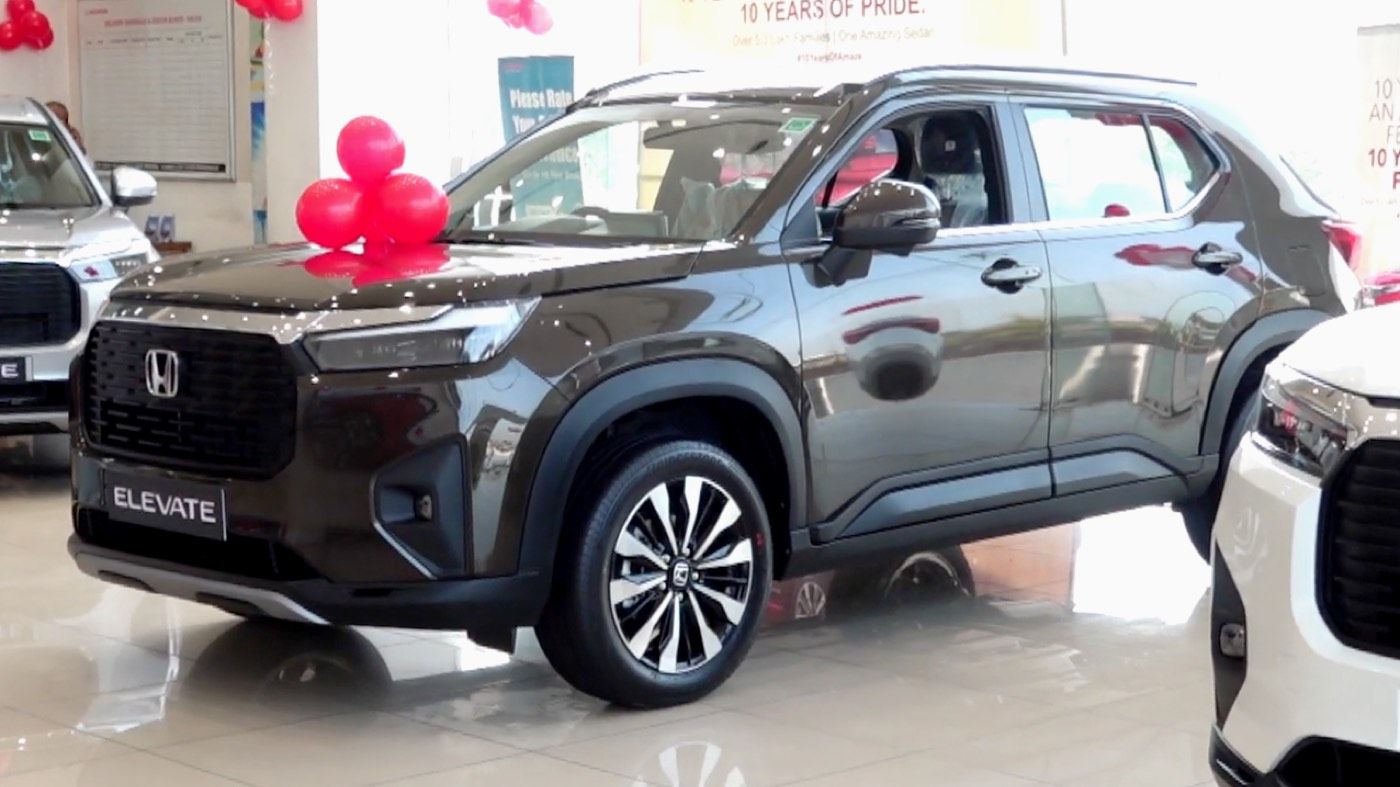
Honda revises the Elevate’s equipment and pricing while leaving the 1.5 petrol alone
Rear vents, a wireless charger and LED headlamps spread down the variant ladder; the entry price holds at ₹10.99 lakh while the flagship CVT moves past the ₹16.79 lakh the catalogue currently records.
-
News 3 min
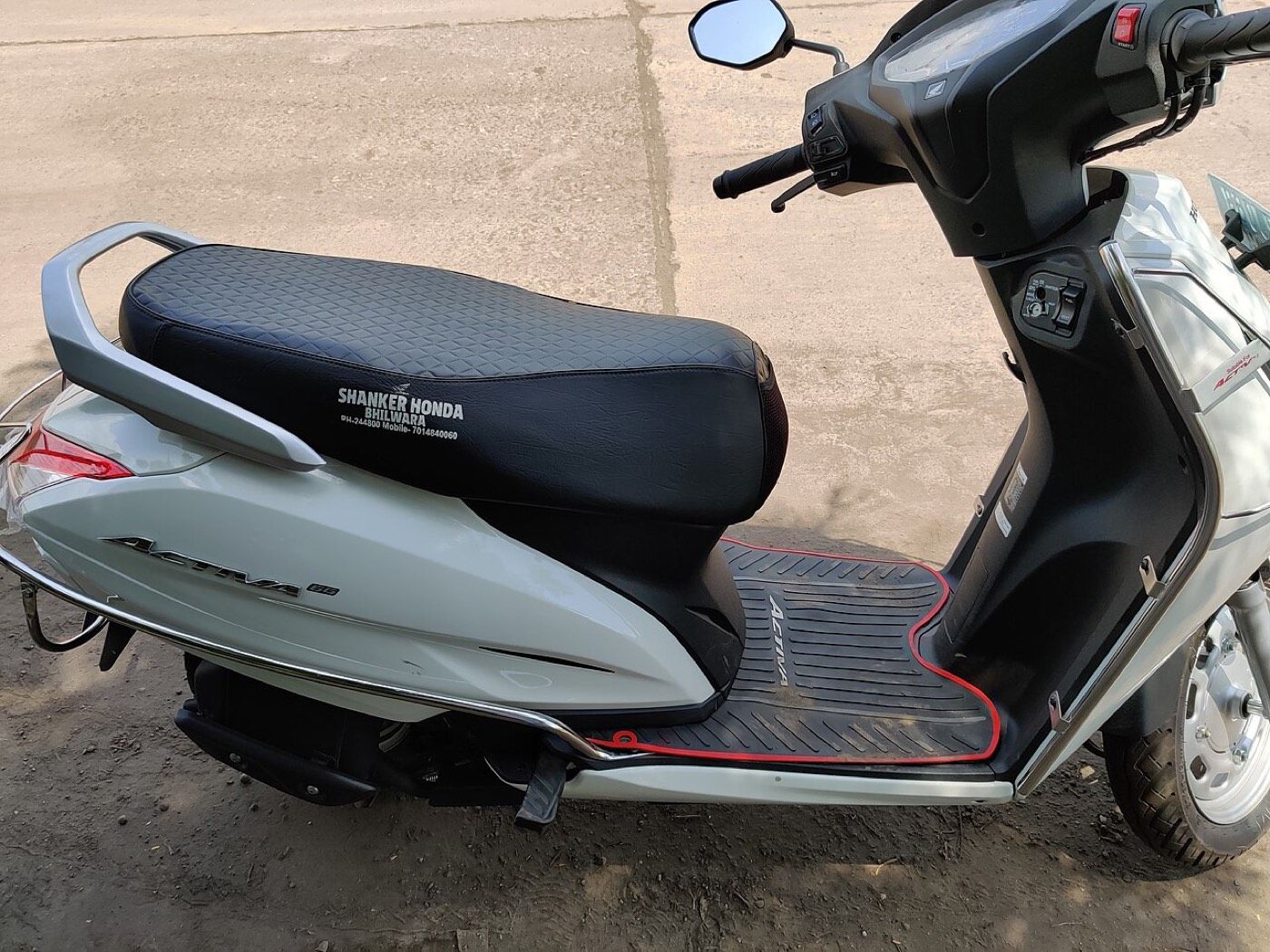
Honda updates the Activa 6G with equipment changes aimed at owners, not shoppers
The best-selling scooter keeps its 110 cc engine and ₹76,000 entry price, with Honda concentrating this update on tyre spec, instrumentation and everyday usability.
-
News 3 min
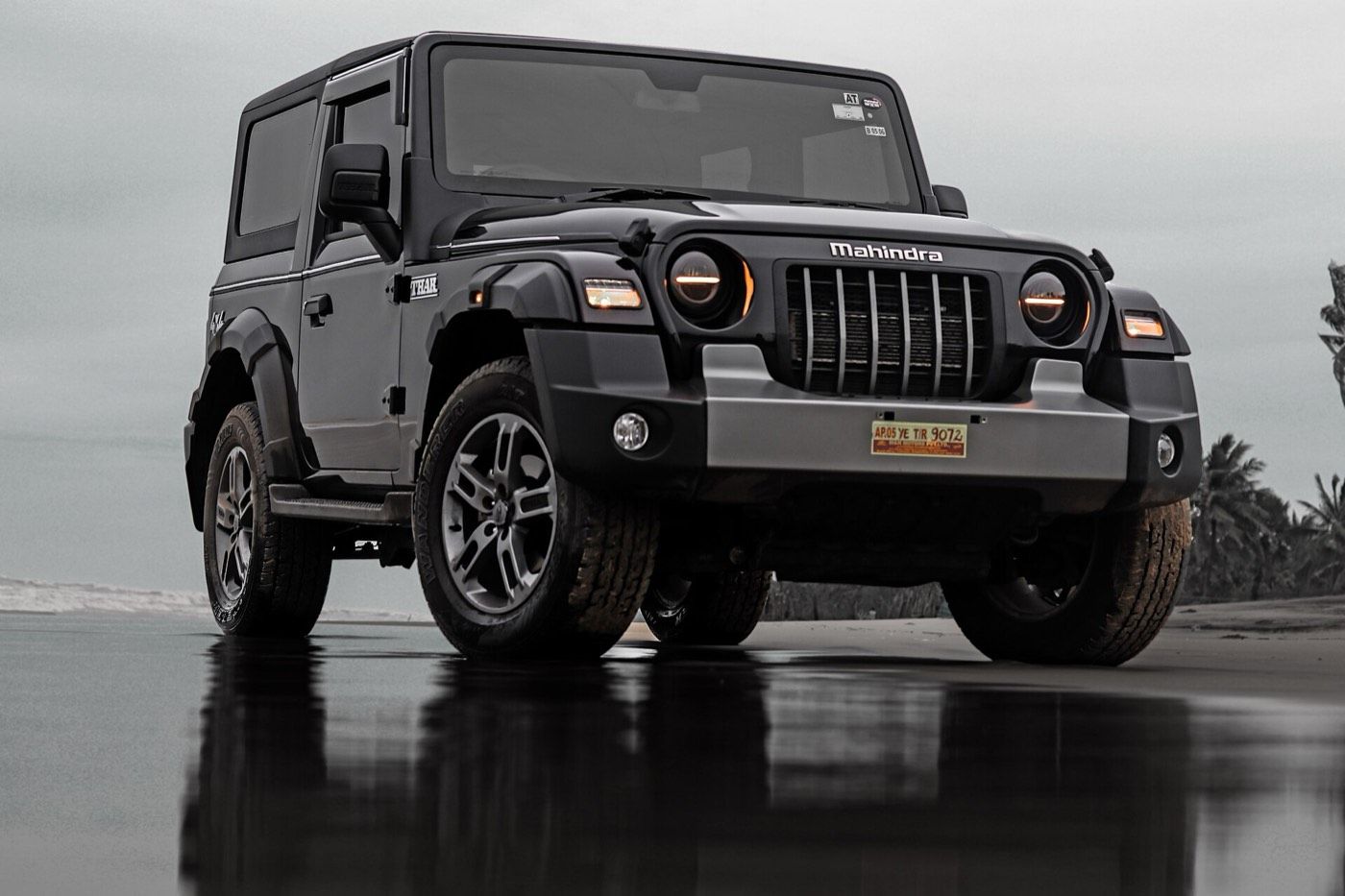
Mahindra gives the 2026 Thar more standard kit and lifts the 4WD flagship past ₹16.5 lakh
A model-year revision puts the digital cluster and all-terrain tyre option lower in the range, holds the ₹9.99 lakh entry price, and asks ₹16.75 lakh for the HT(O) 4WD — above what the catalogue currently records.