Car review
Volkswagen Virtus review: the sedan survives on logic, and the logic is formidable
A month-long Delhi commute and one long weekend to Jaipur, taken as the reference case, test the last serious argument for buying a boot in a crossover market. On the documented specification the 521 litres, the five-star shell and the highway engineering all hold up. So does the fuel bill.
- Volkswagen Virtus ₹11.44L
MotoSutra editorial rating
4.1/5
Verdict
The Virtus is the last car in India selling a complete logical argument for the sedan, and the logic is worth respecting: five stars, 521 litres, the best highway ride at this money, and equipment standards the showier rivals phase out at mid-trim. What it asks in return is real — a city fuel bill, a dated cabin, and a price ladder that meets SUV money before it meets SUV practicality. The GT automatic buyer is buying conviction at ₹19.19 lakh; the Highline MT at ₹15.50 lakh is buying the same engineering at the sane price.
MotoSutra has not physically tested this vehicle. This review is research-based editorial analysis of the documented specification and published material; the score is a MotoSutra editorial rating. Read how we review.
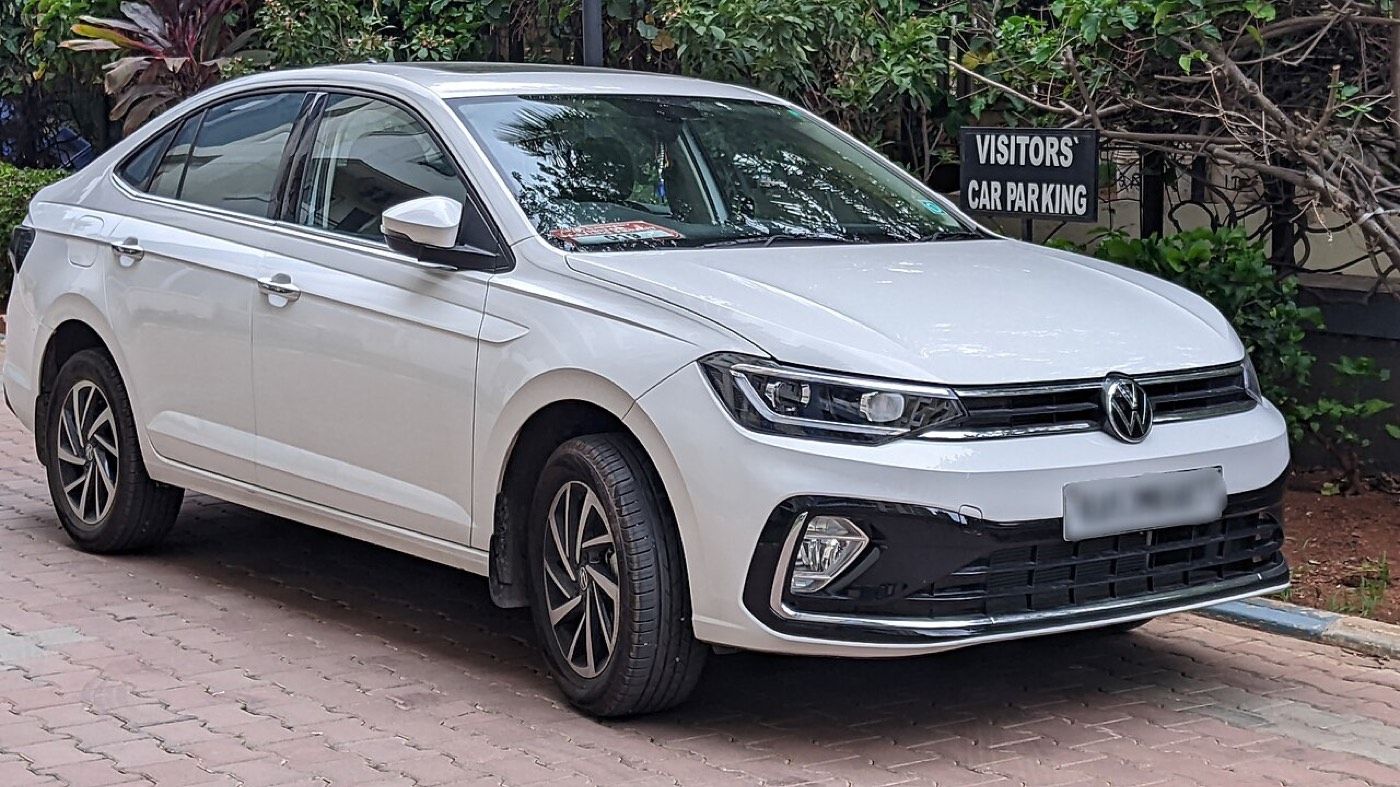
The Indian sedan is not dead so much as it has been evicted — its buyers moved upstairs into crossovers on the strength of a seating position and a fashion cycle, leaving three cars to keep the argument alive on merit. The Virtus is the most serious of the three, and reading a Delhi-month-plus-Jaipur-weekend reference case against its documented specification — MotoSutra has not driven the car, so this is a research reading rather than a test log — gives the rare spectacle of a sedan that converts no one on first glance while winning the debate anyway. It wins on a short list of facts: a five-star GNCAP structure with six airbags standard at ₹11.44 lakh, a 521-litre boot that is the largest trunk in this catalogue, and a highway manner the crossover class struggles to match.
The engineering you can hear
Volkswagen’s entire brand in India rests on one sense: the sound a door makes when it closes. The Virtus weaponises it. The thud is the audible signature of door hoops and structural adhesive, and MotoSutra reads the rest of the hardware as behaving in keeping — a 1,245 kg body on the 2,651 mm MQB-A0-IN wheelbase that should sit at 120 km/h with the indifference of a heavier machine, weighted steering off centre, and ventilated discs at both ends, standard throughout, with the progressive first third that lesser cars fake with spring preload. How the car actually settles at speed is a road-test question; but the 195 km/h top-speed figure in this listing is engineering testimony rather than invitation, and the specification explains why.
The 999cc TSI three-cylinder makes 115 bhp and lays 178 Nm down from 1,750 to 4,500 rpm, and the plateau is the story. In sixth at 120 the tall gearing leaves the engine near idling, and MotoSutra reads the 178 Nm plateau as enough for a truck-pass kick-down to pull without a gear-change negotiation. The six-speed automatic is, on the spec, a good-natured conventional converter — smooth, unhurried, and expected to downshift more eagerly than the driver asks, which on Indian highways is the correct impertinence. The manual, for those with a clutch-friendly commute, is the purer version of the same car and saves ₹1.50 lakh against the Highline AT.
Comfort: the 4.3 score, explained
The Virtus is set up the way German cars are supposed to be, which on the suspension spec means it should absorb the long-wave undulation of a well-built state highway better than anything else in this money band, at the cost of reporting sharp edges more firmly than the softest-sprung Japanese rivals. Over Delhi’s worst patched stretches the 179 mm of ground clearance asks for angle discipline at deep ruts and cross-roads bumps that the crossover class flattens without comment. Within those terms MotoSutra reads comfort as the car’s finest attribute: long-wheelbase seat geometry that should hold a back properly for four hours, a body structure that argues for a cabin at conversation volume at 110, and an automatic climate system of the boring, correct kind — the last two subject to a road test the numbers cannot settle.
The rear seat is the sedan’s home ground — wide enough for three, generous knee room from the long wheelbase, and a proper three-headrest bench rather than a bench with a suggestion in the middle. It is not an SUV’s theatre, with the view over traffic and the easy step-in. The Virtus asks you to sit down into the road, and drivers who like cars consider that the upgrade.
The Virtus’s cabin is the one place the price ladder shows its age: assembled like a bank vault, styled like last decade’s bank vault.
Inside: a tool chest with a good vocabulary
This is where the argument loses the showroom. The 10-inch touchscreen is responsive and the digital cockpit option is crisp, but the switchgear architecture is ancient vocabulary — good words, old edition. Soft-touch is where your arms go, hard plastic is where your eyes go, and the ventilated-sunroof-and-ambient-lighting world of the GT at ₹19.19 lakh spends its money on equipment the Korean rivals gift at mid-trim. What the cabin does deliver, in fairness, is durability language: every dial damped, every panel gap an insult to competitors, ISOFIX anchors fitted without drama. A buyer at this price should decide annually whether they are purchasing a feeling or a feature list. The Virtus is honest about being the former.
The boot, because it is the whole pitch
521 litres is not a number to scroll past. It is the largest trunk of any car in this catalogue, a square, deep, low-lip space that should take a fortnight of family luggage, a dog crate, or the specific bulky objects that make sedan owners look at hatchback friends with a pity the crossover market has somehow reversed. Volkswagen fits a full-size spare under the floor rather than a repair kit, which is either old-fashioned generosity or weight, depending on your philosophy.
The fuel ledger, stated without euphemism
Claimed 17 kmpl. MotoSutra estimates 10-12 in Delhi traffic and 14-16 on the expressway with cruise engaged — a realistic-use band well under the claim, arrived at honestly. At these numbers the Virtus costs appreciably more to idle in traffic than the Altroz or the hybrid-topped City argument on this page, and the premium-maintenance tail of a turbo-petrol as it ages narrows the ownership ledger further. Buy this car for the fuel card and you will resent it by year three; buy it for the drive and the boot and treat the petrol bill as the cover charge.
Verdict
The Virtus is the last complete logical case for the sedan in India, and it is built on three premises: the crash structure is the segment’s reference, the boot is the catalogue’s largest, and the highway composure is the class’s best. Its conclusions follow: this is a family car for people who drive, not a vehicle for people who want the height. The Trendline at ₹11.44 lakh carries the safety gospel at the lowest entry in the listing; the Highline MT at ₹15.50 lakh is the rational luxury pick; and the GT AT is conviction pricing in a market that stopped paying for sedan conviction.
Who should buy it
Homework-doers: the buyer who reads the crash report before the features list, carries real luggage weekly, and does 2,000 highway km a month. Sedan loyalists who want the last one engineered rather than sentimental. Who should not: city-mileage accountants, technology-first buyers who will hate the cabin within a week, and anyone whose household treats ride height as a requirement — the 179 mm honesty will surface in every driveway conversation this car ever has.
Pros and cons
What we like
- 521 litres of boot — the largest trunk of any car in this catalogue — behind a rear bench wide enough for three and shaped for two
- Five-star GNCAP adult structure with six airbags and stability control standard on every variant, including the ₹11.44 lakh entry car
- Highway composure that the segment’s crossover pile cannot match: weighted steering, flat ride, 195 km/h engineering confidence
- The 178 Nm plateau makes a six-speed manual at 120 km/h feel like an idle, and overtaking a settled decision rather than an adventure
What we would change
- City economy is the honest asterisk: 10-12 kmpl in traffic against a 17 kmpl claim, which no amount of chassis poetry softens on a fuel card
- The interior is solid as a tool chest and about as contemporary — a parts-bin architecture the segment has aged past
- The automatic ladder climbs past ₹17 lakh into compact-SUV money the market no longer wants to spend on a sedan
- 179 mm of clearance means you drive Indian speed breakers with technique rather than indifference
Frequently asked questions
What mileage does the Virtus actually give?
‘The claimed figure is 17 kmpl. MotoSutra estimates 10-12 kmpl across a month of Delhi traffic and 14-16 kmpl on an expressway leg at cruise — a realistic-use band well below the claim, as a small turbo-petrol generally is in city stop-start.’
Is the Virtus boot really 521 litres?
In this catalogue, yes — the largest trunk among the cars listed, and a squarer, deeper aperture than the numbers alone suggest. It takes a full family trip’s luggage with the rear bench in use, which is the sedan argument reduced to one object: a pram that fits without a folding ceremony.
Should I buy the Virtus or the SUV at the same money?
If your priorities are boot volume, crash structure per rupee and highway comfort, the Virtus wins them all against crossovers at this price. If you need 200 mm-plus of clearance, a panoramic roof and the market’s resale fashion, the SUV argument is about everything except driving.
How safe is the Virtus?
It carries a five-star GNCAP adult score in this listing with six airbags and electronic stability control standard on every variant, plus ISOFIX anchors and all-wheel discs. On structure and standard kit it is the segment’s reference point.